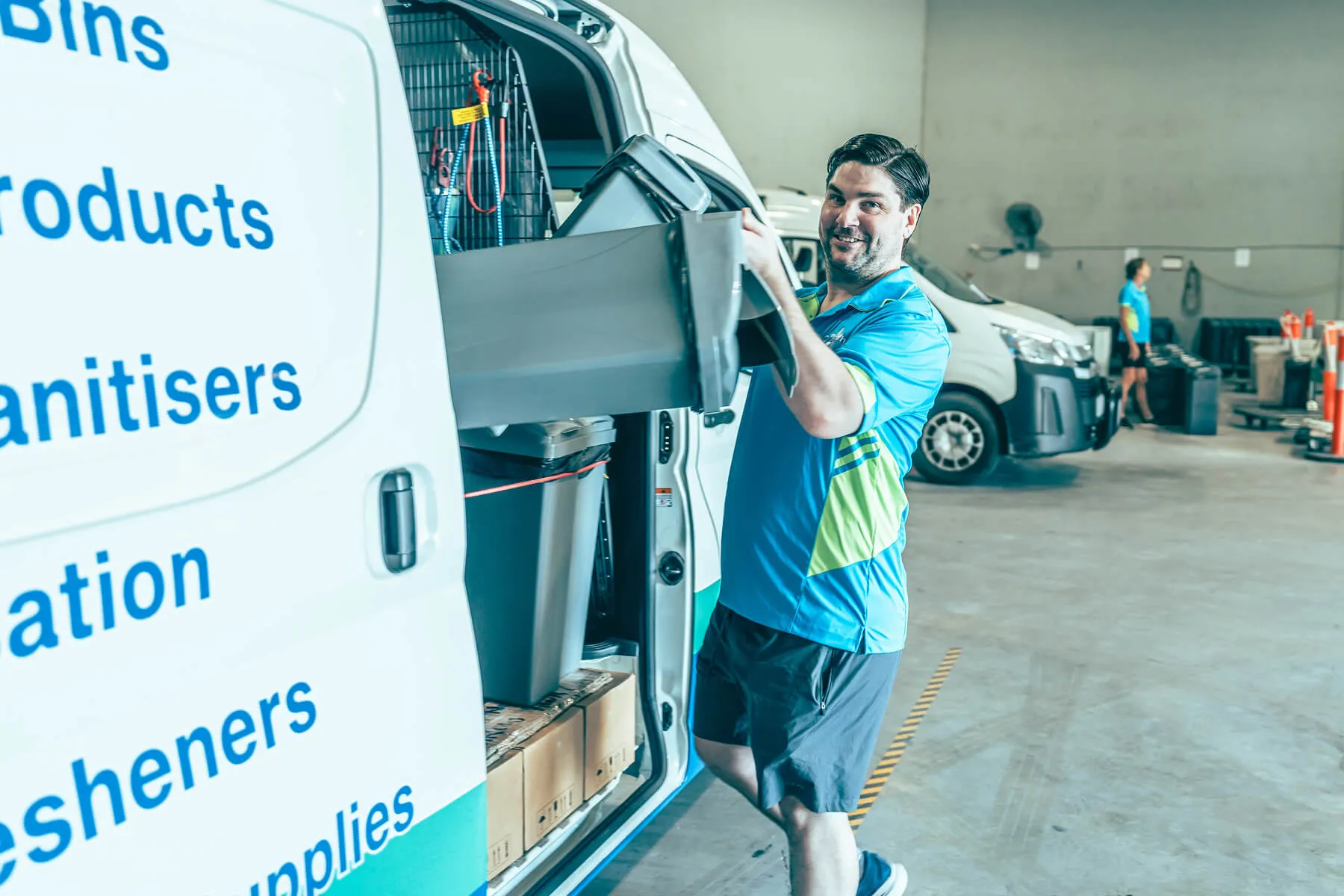
Touch-free hygiene explained: Better compliance and safer spaces
TL;DR:
- Touch-free hygiene systems can reduce surface bacteria by up to 90 percent. They improve handwashing compliance and lower contamination risks. Proper maintenance, user education, and strategic selection are essential for optimal benefits.
Touch-free hygiene isn’t a luxury feature for upscale offices anymore. Touchless systems reduce surface bacteria by up to 90%, a figure that should stop any facility manager in their tracks. Across Brisbane, the Gold Coast, and Melbourne, businesses face growing pressure to meet hygiene compliance standards, reduce liability, and protect the people who walk through their doors every day. Touch-free technology covers any non-contact system that dispenses, flushes, or sanitises without the user physically touching a surface. This article explains how it works, what it delivers, and how to choose and implement the right setup for your facility.
Table of Contents
Key Takeaways
| Point | Details |
|---|---|
| Major bacteria reduction | Touch-free hygiene can reduce surface bacteria in facilities by up to 90%. |
| Compliance and savings | Australian touch-free solutions support legal standards and deliver up to 30% water savings. |
| Better user experience | Non-contact equipment boosts handwashing rates and lowers the risk of cross-contamination. |
| Selection matters | Choose devices suited to your site’s foot traffic, compliance rules, and maintenance capacity. |
How touch-free hygiene works
Let’s start with what’s actually happening inside these units, because understanding the mechanics makes it much easier to evaluate products and avoid being misled by marketing language.
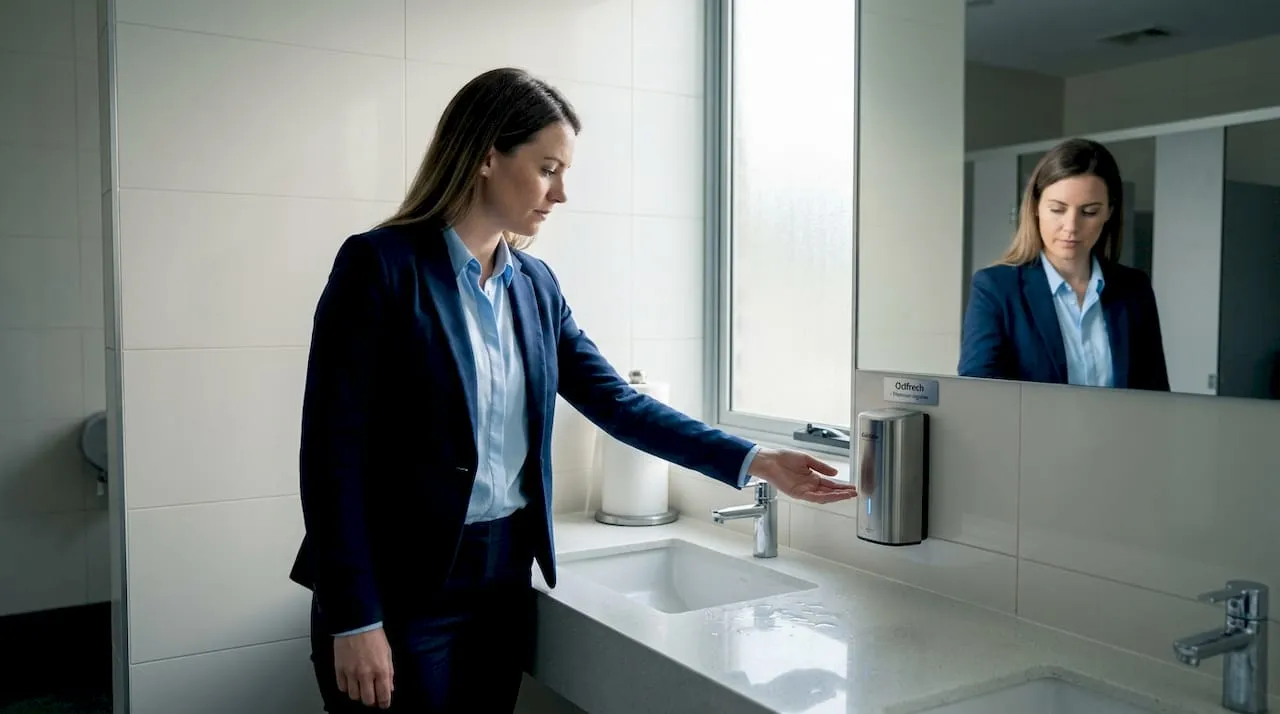
The core mechanics involve infrared proximity sensors, signal processing algorithms, and actuation layers that trigger responses without touch. In plain language: a sensor detects the presence of a hand, sends a signal to a processor, and the processor tells a motor or valve to activate. The whole sequence takes a fraction of a second. This same principle drives sensor taps, automatic soap dispensers, touchless flush valves, hand dryers, and sanitary bins.
These components work together across a wide range of fixtures you’ll already find in commercial bathrooms, kitchens, and communal areas. Here’s a quick overview of the most common touch-free fixtures and where they perform best:
| Fixture | Key feature | Best location |
|---|---|---|
| Sensor tap | Infra-red activation, auto shutoff | Bathrooms, kitchens, food prep areas |
| Automatic soap dispenser | Metered dosing, battery or mains powered | All washroom locations |
| Touchless hand dryer | High-velocity air, no contact | High-traffic bathrooms |
| Touchless sanitary bin | Foot or sensor pedal, sealed lid | Female amenities, healthcare rooms |
| Auto flush valve | Sensor-triggered cistern | All toilet cubicles |
| Touch-free hand sanitiser | Infrared sensor, gel or foam output | Entrances, receptions, ward entry points |
For Australian facilities, compliance is more than a nice-to-have. Touch-free solutions from providers like Billi and GoHygiene are specifically designed for Australian commercial settings and comply with AS1428.1 accessibility standards, which govern accessible design in public and commercial buildings. This matters if you’re operating in a healthcare, retail, or hospitality setting where public access is a legal consideration.
Automatic soap dispensers and touch-free hand sanitising stations are among the easiest first upgrades for most facilities. They slot into existing mountings in most cases and immediately remove the highest-touch points in any washroom.
“Sensor reliability is not negotiable in high-traffic commercial environments. A dispenser that misfires or a tap that fails to activate under standard lighting conditions undermines the entire hygiene protocol you’ve built around it.” This is why specifying units tested under Australian ambient lighting conditions matters more than the spec sheet suggests.
Contactless dispensers in clinics and similar high-risk settings have demonstrated this reliability requirement clearly. A system that only works in ideal conditions isn’t a hygiene system; it’s a liability.
How touch-free systems reduce contamination
Now that the technology is clear, let’s look at what these systems actually do for your contamination levels, because this is where the business case becomes impossible to ignore.
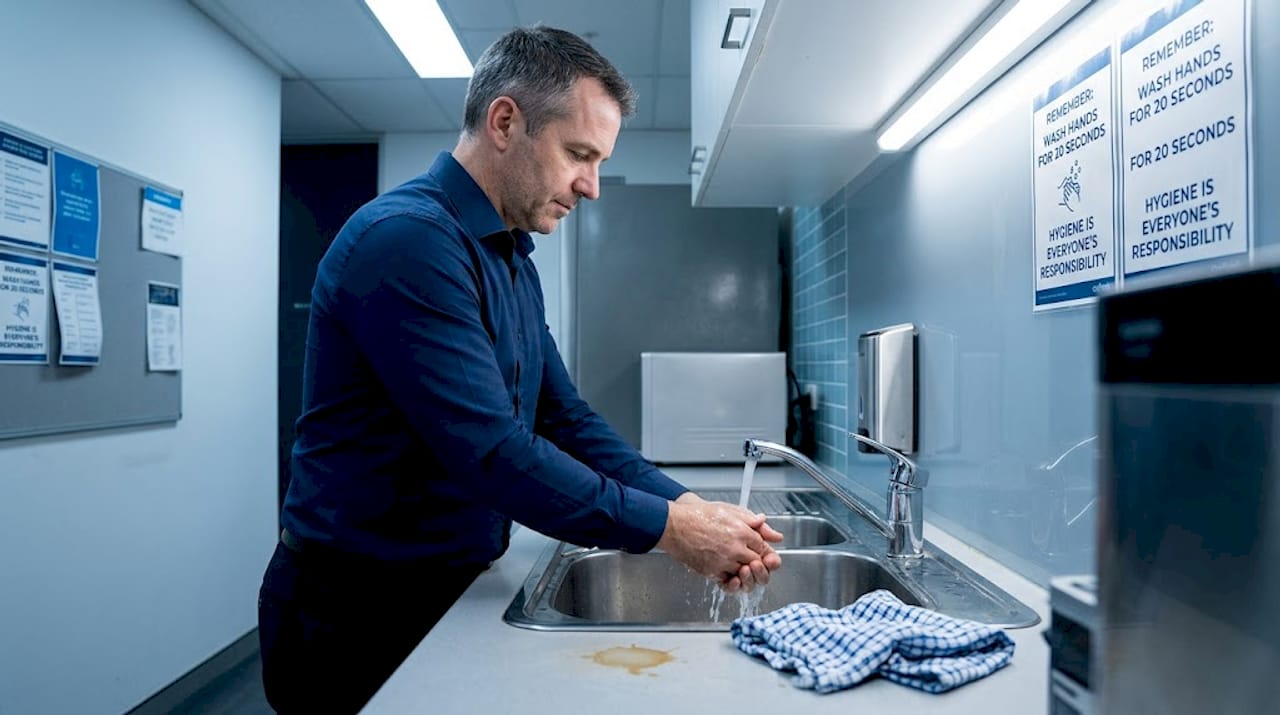
The headline figure is significant: touchless systems reduce surface bacteria by up to 90% compared to manual alternatives. Taps, soap dispensers, and flush handles are among the most frequently touched surfaces in any commercial facility. Every person who uses them leaves behind a microbial deposit. Every person who touches them picks one up. Removing that cycle breaks the contamination chain at its most reliable point.
Handwashing compliance also improves when non-touch equipment is in place. People are more likely to wash their hands properly when they don’t have to touch a grimy knob to get soap or a lever to turn on the water. The barrier to compliance is lower, so compliance rates go up.
There’s an important nuance around hand dryers worth knowing. The same research shows that electric hand dryers increase aerosol contamination at a rate of 10 to 100 times compared to paper towels. High-speed dryers force bacteria-laden water droplets into the air and onto surrounding surfaces. In pathogen-sensitive environments like medical centres, aged care facilities, or commercial kitchens, this is a serious consideration.
The additional features driving compliance include:
-
Metered dosing: Automatic dispensers deliver a consistent volume of soap or sanitiser every activation, eliminating both under-use and product waste
-
Water savings: Touchless faucets save around 30% water compared to manual taps, aligned with EPA water efficiency benchmarks
-
UV disinfection integration: Some soap and sanitiser dispensers now include UV chambers that kill 99.9% of germs on the dispensing nozzle between uses
-
Consistent activation: No reliance on users remembering to press, pump, or turn anything
For infection reduction case studies across comparable settings, the pattern holds: reducing contact points reduces transmission events.
Pro Tip: In pathogen-sensitive areas like medical suites, food preparation rooms, or early childhood centres, pair touchless soap and sanitiser dispensers with paper hand towels rather than electric dryers. You get the contact-free benefit of touchless dispensing without the aerosol risk that high-speed dryers introduce.
Pairing using hand towels with touch-free dispensing gives you the best of both approaches. It’s a combination that’s supported by research and used in leading Australian healthcare facilities. If you’re reviewing your essential hygiene products, this is the combination worth prioritising first.
Selecting the right touch-free hygiene solution
With the benefits clear, the practical question becomes: which system suits your specific facility, and how do you choose without overcomplicating it?
The answer depends heavily on your facility type, foot traffic, and the specific compliance obligations you’re working with. Here’s a comparison to help frame your decision:
| Facility type | Priority fixtures | Key compliance factor | Recommended approach |
|---|---|---|---|
| Commercial office | Soap dispensers, sensor taps, bins | AS1428.1 accessibility | Battery-powered wall-mount units |
| Gymnasium | Sanitiser stations, touchless bins | High-traffic durability | High-capacity units with frequent servicing |
| Healthcare clinic | All touchless, paper towels only | Infection control protocols | Full touchless suite, no electric dryers |
| Service station/retail | Sanitiser entry stations, sensor taps | Public hygiene liability | Entry-point sanitiser, auto soap in bathrooms |
| Hospitality venue | Bins, taps, soap dispensers | Food safety regulations | Full washroom upgrade with metered soap |
For Brisbane, Gold Coast, and Melbourne facility managers, battery-powered wall-mount touchless bins and taps like the GoHygiene VH701 are well suited to high-traffic compliance needs. They reduce cross-contamination while cutting water and waste costs, and they don’t require an electrician to install.
Here’s a step-by-step approach to selecting and deploying touch-free solutions:
-
Audit your current contact points. Identify every surface in your washrooms and communal areas that requires touching to operate.
-
Prioritise by traffic and risk. High-use, shared surfaces in pathogen-sensitive areas come first.
-
Check AS1428.1 requirements. If your building has public access obligations, ensure any new fixtures meet accessibility standards.
-
Confirm power source options. Decide between mains-powered and battery-operated based on your mounting locations and maintenance capacity.
-
Specify for your lighting environment. Sensor reliability in variable or low-light conditions is a real-world factor that many spec sheets understate.
-
Plan your maintenance schedule upfront. Know who will check batteries, clean sensors, and refill consumables before you install anything.
-
Engage a local provider. Australian providers understand local compliance frameworks and can source units suited to our climate and usage patterns.
Review sanitary bin compliance essentials to make sure your bin selection meets current regulatory expectations before you commit to a supplier.
For touchless tap options across different fixture types, the range has expanded considerably in recent years. The key is matching sensor sensitivity and build quality to the specific demands of your facility, not just buying the cheapest unit available.
Pro Tip: Two factors that facilities consistently overlook during selection are sensor activation reliability under variable ambient lighting and battery life under real usage loads. A dispenser rated for 50,000 activations at lab temperature may behave very differently in a warm, high-humidity Brisbane bathroom. Always ask for field performance data, not just lab specifications.
Cost, ROI, and maintenance: Making it work
Choosing a solution is one thing. Making it pay off operationally is another. Here’s how the numbers and the maintenance realities actually stack up.
The payback period for touchless systems is typically 18 to 24 months driven by 30 to 50% water savings, a 90% reduction in surface bacteria, and fewer hygiene-related staff or visitor complaints. These aren’t abstract figures. In practice, they translate to lower utility bills, fewer sick days, and reduced risk of regulatory penalties or reputational damage from hygiene incidents.
The maintenance picture is honest but manageable:
-
Battery checks: Most battery-powered units require quarterly checks and annual replacement under normal usage
-
Sensor cleaning: Infrared sensors attract soap residue and dust, which degrades accuracy; monthly wipe-downs prevent most issues
-
Consumable restocking: Soap, sanitiser, and hand towels need regular replenishment on a schedule tied to your actual usage, not a generic timeline
-
Specialist versus manual repairs: Simple issues like battery replacement or nozzle blockages are facility-level tasks; sensor failures and motor issues require supplier support
Sensor failures from ambient light interference and battery degradation are the most common operational problems. Manual fixtures are cheaper upfront but carry a consistently higher contamination load from knobs and handles that nobody cleans thoroughly enough under real-world conditions.
A hybrid approach, deploying full touchless in high-traffic and high-risk zones while retaining manual fixtures in lower-risk areas, suits most budgets without sacrificing compliance where it matters most.
“Hybrid adoption is the pragmatic path for most Australian businesses. But don’t compromise in the areas where it counts. High-traffic bathrooms, healthcare rooms, and food prep areas deserve full touchless investment. The ROI there is clear and the risk of cutting corners is not worth it.”
Visit facility hygiene best practices for a broader operational framework. And if you’re weighing up whether to replace or service your existing bins, hygiene bins replacement is worth reading before your next service review.
For a broader look at sustainability and hygiene ROI, the connection between reduced water use, fewer consumables, and long-term cost savings is increasingly hard to ignore in any serious facilities budget conversation.
What most guides miss about touch-free hygiene
After 40 years working with commercial facilities across Brisbane, the Gold Coast, and Melbourne, we’ve seen the full cycle of how businesses adopt new hygiene technology. And the most consistent mistake isn’t buying the wrong sensor tap. It’s treating the hardware as the whole solution.
Touch-free systems only reduce contamination if they’re maintained, restocked, and actually used correctly. A soap dispenser with an empty cartridge is worse than no dispenser because it trains people to skip handwashing. A sensor tap with a film of soap residue over the IR lens that triggers randomly erodes user trust fast. The technology is not self-sustaining. It requires the same operational discipline as any other part of your hygiene programme.
The second thing most guides skip: user education matters enormously. Visitors and staff who don’t understand how to activate a sensor correctly often assume the unit is broken and either use the nearest manual alternative or give up entirely. Simple signage explaining how to activate each unit, placed at eye level near the fixture, measurably improves compliance outcomes. It costs almost nothing and is frequently the difference between a system that works and one that doesn’t.
We’ve also seen businesses invest heavily in touchless hardware while simultaneously cutting back on core cleaning schedules. That’s backwards. Touch-free technology reduces the microbial load transferred between surfaces. It doesn’t replace the cleaning process that removes the contamination already present. Your cleaning protocols and your touch-free systems need to work together, not compete for budget.
For facilities in healthcare or similar high-risk settings, hygiene compliance in hospitals covers the intersection of cleaning protocols and touch-free requirements in detail. The principles translate directly to any facility with serious infection control obligations.
Pro Tip: Before your next touch-free rollout, print and laminate simple activation instructions for every fixture type you’re installing. Stick them at adult eye level. Review them after 60 days. You’ll find at least one that needs updating based on real user behaviour. This single step prevents more compliance failures than most hardware upgrades.
Next steps: Bringing touch-free hygiene to your facility
Ozifresh has been supporting Australian businesses with professional hygiene solutions for over 40 years, and touch-free technology is now central to what we recommend for most commercial settings. Whether you’re managing a busy office in the CBD, a healthcare clinic on the Gold Coast, or a hospitality venue in Melbourne, we have ready-to-deploy solutions that meet Australian compliance standards and fit the operational realities of your facility.
Our Melbourne hygiene services team can assess your current setup and recommend a tailored combination of sanitary bins, automatic soap dispensers, and hand hygiene products that address your specific compliance gaps. We handle the supply, installation guidance, and ongoing servicing so your team doesn’t have to manage it from scratch. Contact us to arrange a consultation and compliance check for your facility.
Frequently asked questions
Are touch-free hygiene systems required by law in commercial buildings?
While not always mandatory, touch-free fixtures are increasingly recommended to meet hygiene standards and reduce liability in Australian commercial settings. Fixtures must comply with AS1428.1 accessibility standards in buildings with public access obligations.
Do touch-free taps and dispensers really cut down on illnesses?
Yes. Surface bacteria can be reduced by up to 90% with touchless systems compared to manual options, and handwashing compliance improves when the friction of touching equipment is removed.
What are the most common problems with touch-free hygiene equipment?
The main issues include sensor interference from ambient light, battery failure under heavy usage loads, and higher upfront costs compared to manual fixtures. Regular sensor cleaning and scheduled battery checks prevent most failures.
How long does it take for touch-free hygiene systems to pay for themselves?
Most businesses see a return on investment in 18 to 24 months driven by water savings of 30 to 50%, reduced bacteria levels, and fewer hygiene-related complaints or incidents.
Recommended
-
Commercial hygiene best practices for safer facilities | Ozifresh
-
Professional hygiene for safer workplaces: What managers need to know | Ozifresh
-
WHS Hygiene Responsibilities and Safety: Understanding Workplace Health and Safety Duties | Ozifresh
-
Hospital bathroom cleaning steps for hygiene compliance | Ozifresh
Ready for a cleaner, safer workplace?
Contact our team today to discuss hygiene services for your business in Brisbane, Melbourne or the Gold Coast.