Restaurant sanitation tips: the 2026 compliance guide
TL;DR:
- Proper restaurant sanitation involves a strict sequence of cleaning and sanitising to eliminate pathogens effectively. Staff must accurately follow procedures, control temperatures, and use designated products to ensure ongoing food safety compliance.
Restaurant sanitation tips are the structured cleaning and hygiene practices that protect customers from foodborne illness and keep your business compliant with Food Standards Australia New Zealand requirements. Poor sanitation is not just a health risk. It is a licence risk. The industry term is “food safety management,” and it covers everything from sanitiser concentrations to staff hand-washing frequency. This guide gives you the ten most effective practices, the right products, and the routines that hold up under a health inspection.

1. What are the top restaurant sanitation tips for kitchen hygiene?
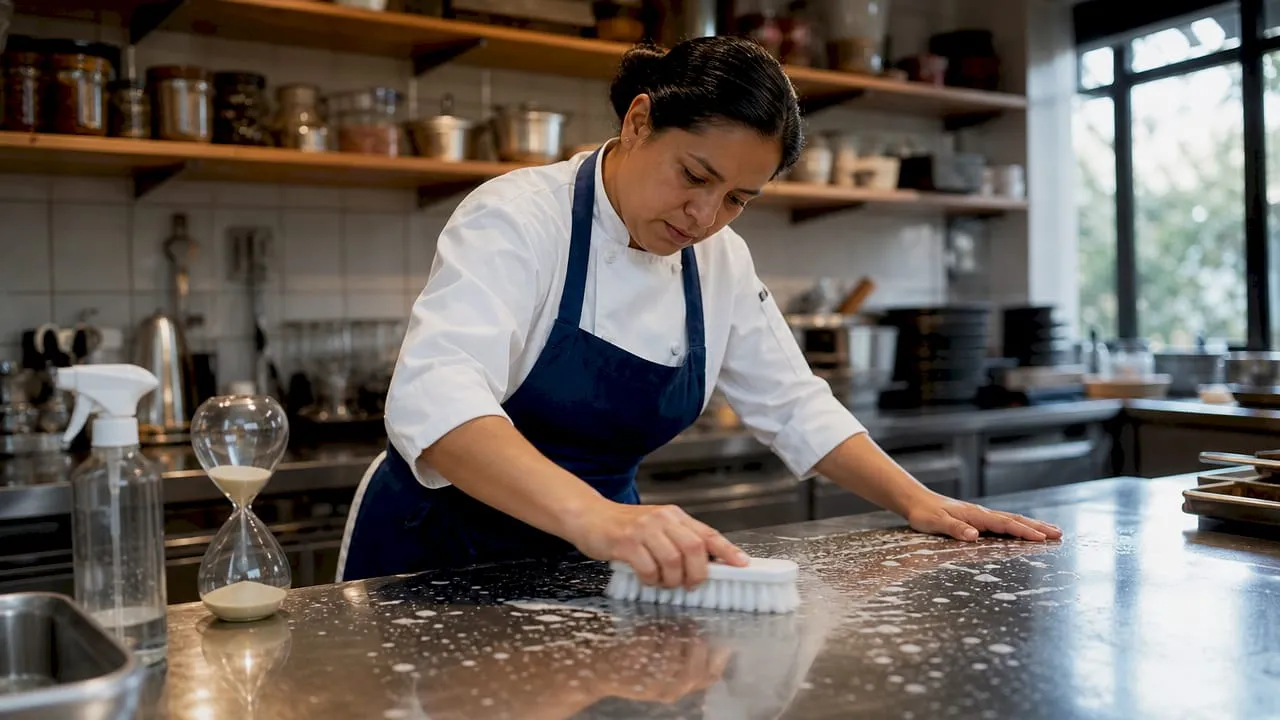
Effective restaurant sanitation starts with understanding that cleaning and sanitising are two separate steps. Cleaning removes visible dirt and grease. Sanitising kills pathogens. Skipping either step makes the other one useless.
The correct sequence for any food-contact surface is: scrape, rinse, wash, rinse, sanitise, air dry. Applying sanitiser over soiled surfaces neutralises the chemical and renders it ineffective. That sequence is non-negotiable.
2. Follow the correct sanitiser concentration every time
Sanitiser must achieve a 5-log (99.999%) pathogen reduction to meet food safety standards. For chlorine bleach on surfaces, that means 100–200 ppm, with items soaking for at least 30 seconds.
Sanitiser potency drops throughout a service shift. Test strips are the only reliable way to confirm concentration remains effective. Check them at the start of each shift and after any high-volume period.
Pro Tip: Keep a logbook next to your sanitiser station. Record each test strip reading with the time and staff member’s name. That log is your first line of defence during a health inspection.
3. Control the temperature danger zone
Bacteria multiply rapidly between 4°C and 60°C. That range is the temperature danger zone, and every minute food spends in it is a risk. Coolers must stay at or below 4°C. Freezers must stay below -18°C.
Check refrigeration temperatures at the start and end of every shift. A digital probe thermometer gives you an accurate reading in seconds. Never rely on the unit’s built-in display alone, as those gauges drift over time.
4. Sanitise food-contact surfaces every four hours
Food-contact surfaces require sanitising every four hours during service, and immediately after handling raw protein. That includes chopping boards, prep benches, slicers, and any surface that touches ready-to-eat food.
Waiting until end-of-service to sanitise prep surfaces is one of the most common and costly mistakes in commercial kitchens. Cross-contamination can occur within minutes of a surface being used for raw meat.
5. Use colour-coded cutting boards to prevent cross-contamination
Colour-coded cutting boards are the simplest physical barrier against cross-contamination in a busy kitchen. The standard codes are red for raw meat, green for produce, and blue for seafood.
Post the colour code on the kitchen wall and include it in staff induction. A new team member who grabs the wrong board during a rush can undo careful prep work in seconds. Visual systems remove the guesswork.
6. Build hand hygiene into every task transition
Hand hygiene is the single most effective defence against foodborne illness. Washing must last at least 20 seconds and finish with drying on disposable towels or an air dryer. Cloth towels spread bacteria between uses.
Washing must happen before shifts, after handling raw meat, after sneezing, after restroom use, and every 30 minutes during service. Reliable soap dispensers and hand towels at every sink remove the friction that causes staff to skip this step.
Pro Tip: Mount hand hygiene stations at the entry to every food prep area, not just near the sink. Proximity drives compliance far more reliably than reminders.
7. Manage glove use correctly
Gloves do not replace hand washing. Glove fatigue causes staff to skip changing gloves between tasks, which creates a false sense of safety and spreads contamination just as effectively as bare hands. Gloves must be changed every time a task changes, and hands must be washed before putting on a new pair.
Never allow staff to handle raw protein and then move to ready-to-eat food in the same gloves. That single habit is responsible for a significant proportion of cross-contamination events in commercial kitchens.
8. Never wash raw poultry in the sink
Washing raw poultry in a sink spreads bacteria up to three feet, contaminating clean surfaces, equipment, and nearby food. This practice is common in home kitchens and sometimes carries over into commercial settings. It must be explicitly prohibited in your kitchen rules.
Raw poultry goes directly from packaging to the cooking process or to a dedicated prep surface. Any surface it contacts gets sanitised immediately using the full scrape-wash-rinse-sanitise-air-dry sequence.
9. Build a structured restaurant cleaning checklist
A cleaning checklist specifies what, when, how, and who for every sanitation task. That structure is what separates kitchens that pass inspections consistently from those that scramble before an auditor arrives.
Your checklist should cover daily, weekly, and monthly tasks. Daily tasks include surface sanitising, floor cleaning, and bin emptying. Weekly tasks cover equipment deep-cleaning, drain flushing, and grease trap checks. Monthly tasks include exhaust canopy cleaning and refrigeration coil inspection.
- Daily: sanitise prep surfaces, clean floors, empty bins, check refrigeration temperatures
- Weekly: deep-clean equipment, flush drains, inspect grease traps, clean behind appliances
- Monthly: clean exhaust canopies, inspect refrigeration coils, audit chemical storage
Demand-based cleaning maintains compliance better than rigid clock-time methods. Align your cleaning schedule with your busiest service periods rather than fixed times that may fall mid-rush.
10. Use POS data to schedule sanitation without disrupting service
Aligning sanitation tasks with traffic surges using POS data keeps hygiene high without disrupting service. This is one of the most underused tools in restaurant operations. Your POS system already shows you when your kitchen is under the most pressure. Use that data to schedule deep-cleaning tasks in the gaps.
Demand-based cleaning is more efficient for continuous compliance than a fixed timetable. A kitchen that cleans reactively and intelligently outperforms one that follows a rigid schedule that ignores service reality.
Pro Tip: Print your weekly POS traffic report and overlay your cleaning schedule on it. Any cleaning task that falls during a peak period should be moved to a shoulder period. This one adjustment reduces both service disruption and sanitation shortcuts.
What cleaning and sanitising products does every restaurant need?
The right products matter as much as the right process. Using the wrong sanitiser concentration, or skipping a product entirely, undermines every other effort your team makes.
| Product | Purpose | Key specification |
|---|---|---|
| Chlorine bleach sanitiser | Surface and equipment sanitising | 100–200 ppm concentration |
| Sanitiser test strips | Verify sanitiser concentration | Check at shift start and after peak periods |
| Colour-coded cutting boards | Prevent cross-contamination | Red (meat), green (produce), blue (seafood) |
| Disposable gloves | Barrier protection during task-specific handling | Change between every task |
| Soap dispensers | Hand washing compliance | Mount at every prep area entry |
| Hand sanitiser | Secondary hand hygiene between washes | Alcohol-based, minimum 60% ethanol |
| Disposable hand towels | Hygienic drying after hand washing | Single-use only |
Air-drying is the correct method for sanitised equipment and utensils. Towel-drying reintroduces bacteria from the cloth onto a clean surface. Commercial dishwashers and three-compartment sinks must reach the correct water temperature and chemical concentration to count as sanitising, not just cleaning.
How does staff behaviour affect sanitation outcomes?
Staff behaviour is the single biggest variable in kitchen hygiene. Equipment and products only work when people use them correctly and consistently. The 2026 hand hygiene guidelines from Victoria’s Department of Health are clear: washing must occur before shifts, after handling raw meat, after sneezing, after restroom use, and every 30 minutes during service.
Sickness policies are equally critical. A staff member working with gastroenteritis or a respiratory illness can contaminate food and surfaces before symptoms are visible. Your policy must require staff to report illness and must make it financially safe for them to stay home. A culture that punishes sick days creates a sanitation risk.
Personal items including mobile phones, jewellery, and bags carry pathogens from outside the kitchen. Phones in particular are handled constantly and rarely cleaned. A clear policy on personal items in food prep areas is part of your hygiene compliance obligations under Food Standards Australia New Zealand.
Pro Tip: Run a monthly five-minute team briefing focused on one specific sanitation behaviour. Rotating the focus keeps the topic fresh and builds a culture where hygiene is discussed openly rather than treated as a management-only concern.
Key takeaways
Effective restaurant sanitation requires the right sequence, the right products, and staff who practise correct hygiene consistently across every shift.
| Point | Details |
|---|---|
| Sequence matters | Always scrape, wash, rinse, sanitise, and air-dry before applying any sanitiser. |
| Test your sanitiser | Check chlorine bleach concentration (100–200 ppm) with test strips at every shift start. |
| Temperature control | Keep coolers at or below 4°C and freezers below -18°C to stop bacterial growth. |
| Checklists drive compliance | A structured checklist specifying what, when, how, and who is your audit defence. |
| Staff behaviour is the variable | Hand washing, glove changes, and sickness policies determine whether products work. |
Sanitation is a culture, not a checklist
After years of working with hospitality venues across Australia, the pattern is clear: the kitchens that fail inspections are not the ones with bad products. They are the ones where sanitation is treated as a task to complete before an auditor arrives rather than a continuous standard.
The most underrated restaurant sanitation tip I can offer is this: pay attention to the hidden areas. Grease traps, floor drains, the undersides of prep benches, and the seals on refrigeration units are where pathogens accumulate between cleans. A neglect of hidden areas like grease traps creates pest risks that no amount of surface sanitising will fix.
The second thing I have seen consistently is that continuous sanitation outperforms last-minute cleaning before inspections every time. Inspectors can tell the difference between a kitchen that is clean because it is always clean and one that was scrubbed the night before. The former has documentation. The latter has excuses.
Build your cleaning schedule around your POS data. Train your staff on the why, not just the what. And treat your commercial hygiene practices as a reflection of your kitchen’s professional standards, because your customers and your inspectors both notice.
— Ozifresh
Ozifresh hygiene services for restaurant compliance
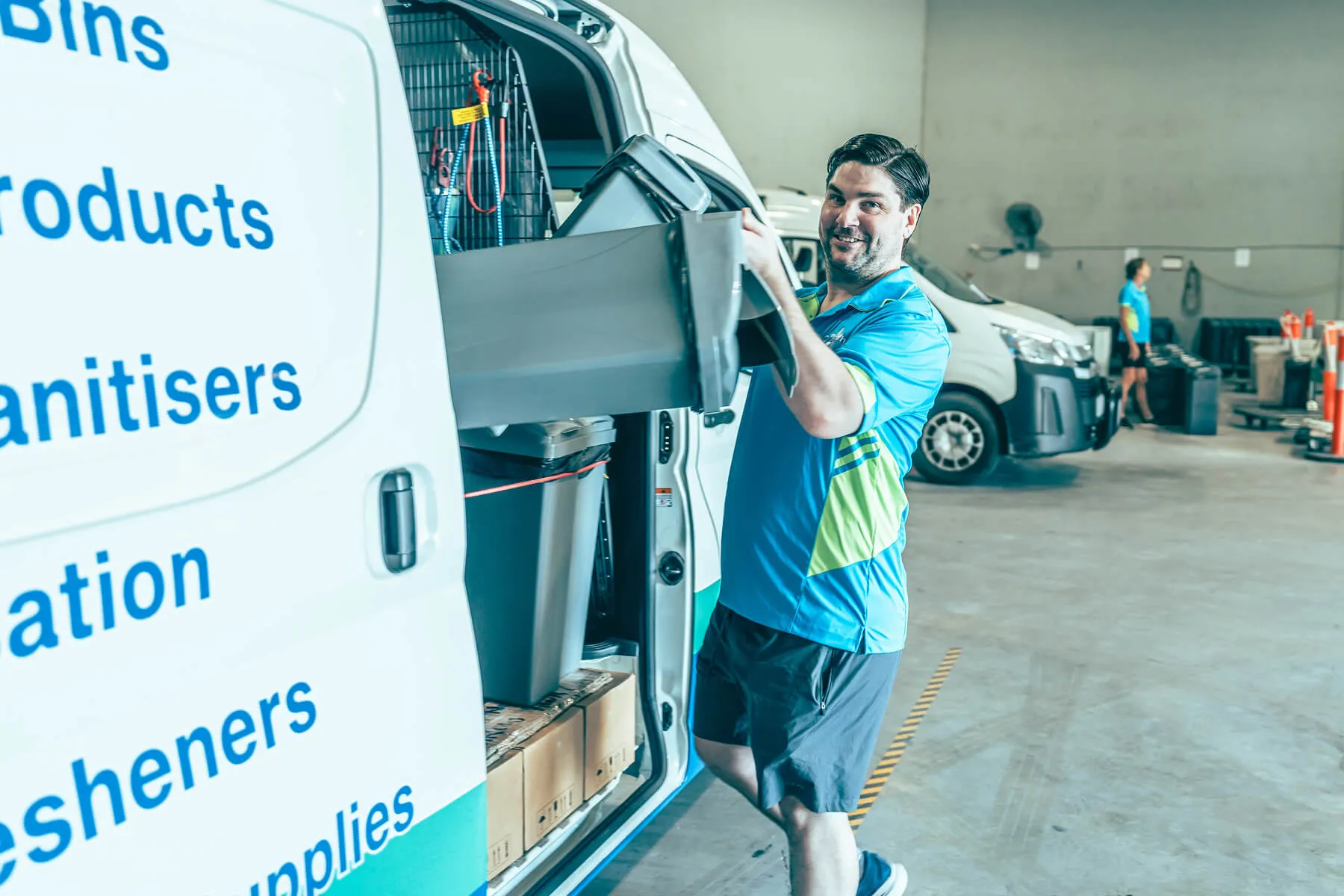
Ozifresh has supported hospitality venues across Brisbane, the Gold Coast, and Melbourne for over 40 years. Their range covers the products restaurants need most: soap dispensers, hand sanitiser, disposable hand towels, sanitary bins, and air fresheners, all supplied on a reliable schedule that removes the risk of running out mid-service. Ozifresh products meet Australian regulatory standards, which means you are not just stocking a shelf. You are building a documented compliance record. For venues that need a complete hygiene solution, Ozifresh’s sanitary products and services are tailored to the specific demands of commercial foodservice environments.
FAQ
What is the correct sanitiser concentration for restaurant surfaces?
Chlorine bleach sanitiser for food-contact surfaces requires 100–200 ppm concentration, with surfaces or items soaking for at least 30 seconds to achieve effective pathogen reduction.
How often should food-contact surfaces be sanitised?
Food-contact surfaces must be sanitised every four hours during service and immediately after handling raw protein such as meat, poultry, or seafood.
What is the temperature danger zone for food safety?
Bacteria grow rapidly between 4°C and 60°C. Refrigerators must stay at or below 4°C and freezers below -18°C to prevent bacterial growth.
Do gloves replace hand washing in a commercial kitchen?
Gloves do not replace hand washing. Hands must be washed before putting on a new pair, and gloves must be changed between every task to prevent cross-contamination.
What should a restaurant cleaning checklist include?
A cleaning checklist must specify what needs cleaning, when it must be done, how to do it correctly, and which staff member is responsible, covering daily, weekly, and monthly tasks.
Recommended
Ready for a cleaner, safer workplace?
Contact our team today to discuss hygiene services for your business in Brisbane, Melbourne or the Gold Coast.