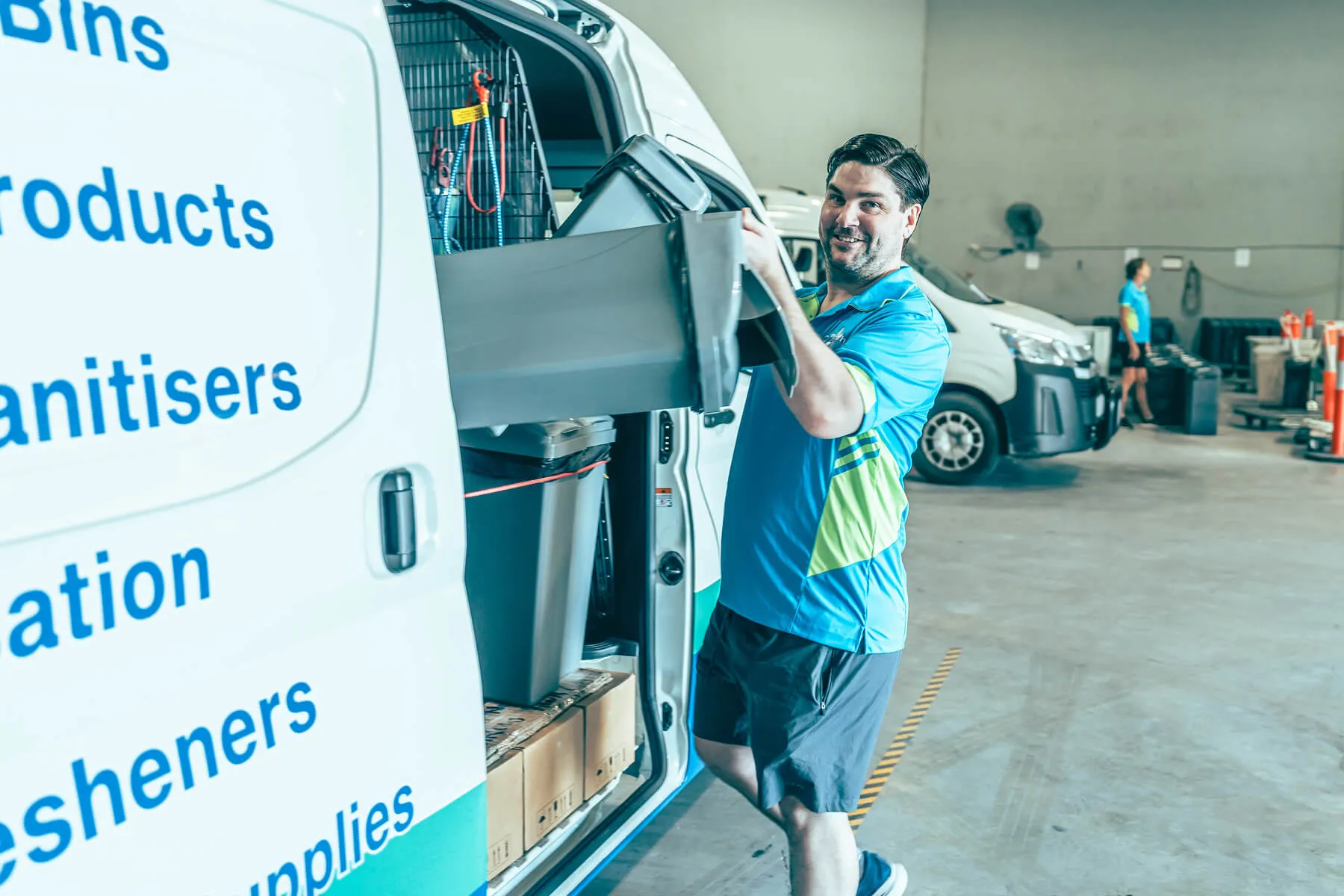
Professional cleaning explained: A facility manager's guide

Many facility managers assume that a regular commercial cleaning contract ticks every hygiene and compliance box. It doesn’t. Standard cleaning removes visible dirt, but it rarely addresses infection control, regulated waste disposal, or the documented protocols that Australian health and safety legislation demands. For managers overseeing commercial workplaces, healthcare facilities, or high-traffic venues across Brisbane, Gold Coast, and Melbourne, the gap between surface-level cleaning and genuine professional hygiene management can mean the difference between a compliant facility and a costly regulatory breach.
Table of Contents
-
Why professional cleaning matters for compliance and reputation
-
Applying professional cleaning: Case studies from Brisbane, Gold Coast, and Melbourne
Key Takeaways
| Point | Details |
|---|---|
| Beyond basic cleaning | Professional cleaning handles hygiene and regulatory needs that general cleaning cannot. |
| Compliance protects reputation | Meeting Australian standards with professional cleaning reduces legal risk and improves public perception. |
| Technology boosts results | Modern cleaning services use advanced products and methods for safer, more effective outcomes. |
| Choose wisely | Selecting a specialised provider simplifies compliance and ensures consistent hygiene standards. |
| Local success stories | Case studies from Brisbane, Gold Coast, and Melbourne show real improvements in facility hygiene. |
What is professional cleaning? Breaking down the basics
Professional cleaning is not simply mopping floors and wiping benches more thoroughly. It is a structured, systematic approach that covers sanitation, infection control, regulated waste management, and documented compliance. Where general cleaning focuses on appearance, professional cleaning focuses on outcomes: reducing pathogen transmission, meeting legislative requirements, and protecting the people who use your facility every day.
Professional cleaning is structured to meet health and regulatory standards, which means every product, method, and service frequency is chosen with a specific hygiene outcome in mind. This is a critical distinction for facility managers who are accountable for the health and safety of staff, visitors, and patients.
A professional hygiene programme typically includes:
-
Sanitary disposal services for feminine hygiene and clinical waste
-
Hand hygiene stations with appropriate sanitisers and dispensers
-
Toilet and urinal sanitisation using targeted chemical treatments
-
Sharps and nappy disposal for healthcare and family-friendly venues
-
Air freshener systems to maintain a pleasant and odour-free environment
-
Hygiene consumables such as soap, paper towels, and gloves
You can explore the full range of sanitary products services to understand how each component fits into a facility-wide hygiene plan. The toilet sanitiser process, for example, goes well beyond a standard clean by using residual antimicrobial agents that continue working between service visits.
“The role of a facility manager is not just to arrange cleaning. It is to verify that hygiene outcomes are being achieved and documented.”
Specifying your requirements clearly and holding providers accountable to measurable standards is what separates a well-managed facility from one that is simply clean-looking.
Why professional cleaning matters for compliance and reputation
Australian workplaces are governed by a range of hygiene and safety obligations under the Work Health and Safety Act, state-based public health regulations, and industry-specific standards for healthcare and food service. Failing to meet these standards can result in fines, forced closures, and serious reputational damage.
Proper hygiene services have significant impacts on workplace safety and compliance, and the consequences of falling short are not abstract. A single hygiene incident in a healthcare facility or commercial kitchen can trigger a regulatory investigation, generate negative media coverage, and erode client trust that took years to build.
Cleanliness also shapes how visitors and clients perceive your organisation. Research consistently shows that facility cleanliness is one of the top factors influencing customer satisfaction scores in commercial environments. For office compliance routines and nursing home hygiene, the stakes are even higher because vulnerable populations are directly affected.
Here is a practical framework for building compliance into your cleaning programme:
-
Audit your current cleaning contract against relevant Australian standards for your industry.
-
Identify high-risk zones such as bathrooms, kitchens, clinical areas, and entry points.
-
Specify hygiene outcomes rather than just cleaning tasks in your service agreement.
-
Request documented reports after each service cycle to maintain an audit trail.
-
Review and update your cleaning specifications at least annually or after any regulatory change.
Pro Tip: Build a facility-specific cleaning checklist that maps each task directly to a regulatory requirement. This makes compliance audits faster and gives you clear evidence of due diligence if your facility is ever inspected.
Professional cleaning methods and technologies explained
With risks and compliance in mind, facility managers need to know what types of cleaning approaches are available and which deliver the best outcomes. The gap between traditional and modern professional cleaning is significant, and understanding it helps you ask better questions when evaluating providers.
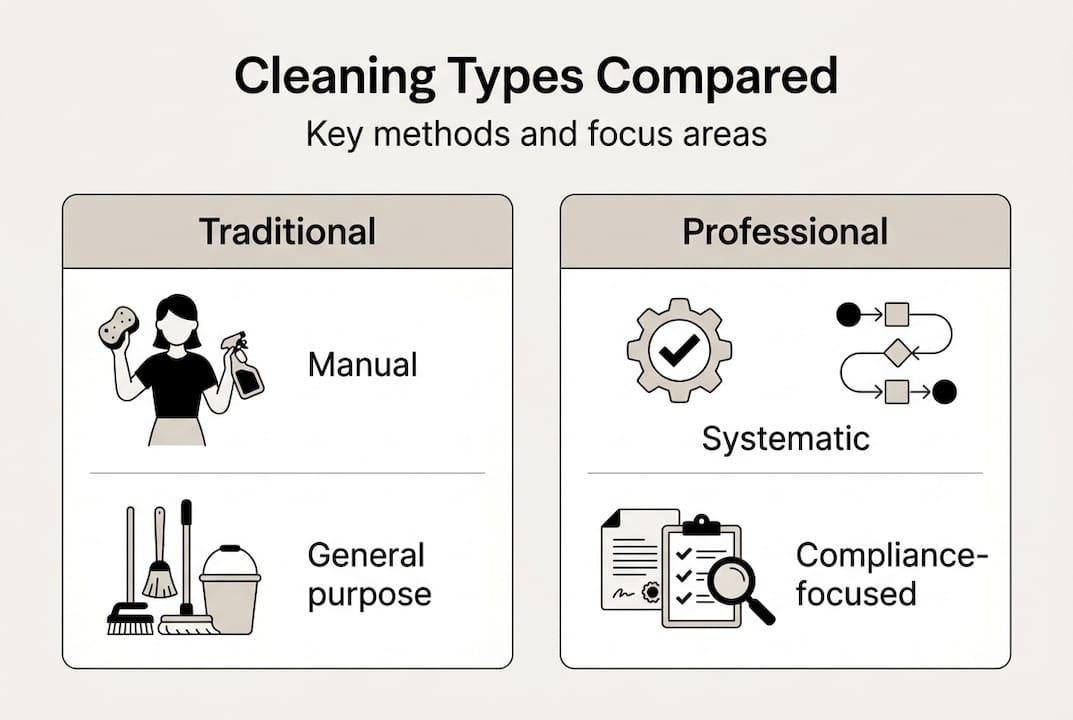
| Feature | Traditional cleaning | Modern professional cleaning |
|---|---|---|
| Method | Manual, general-purpose | Specialised, technology-driven |
| Products | Standard detergents | Antimicrobial and residual treatments |
| Dispensers | Manual refill | Touchless, sensor-activated |
| Waste disposal | General bins | Regulated sharps, sanitary, nappy disposal |
| Compliance reporting | Informal or none | Documented, auditable records |
| Frequency management | Ad hoc | Scheduled, needs-based cycles |
Advanced methods such as touchless sanitisers and sharps disposal are central to effective facility cleaning, particularly in healthcare and high-traffic commercial settings. Touchless dispensers reduce cross-contamination at the point of use, which is one of the most common vectors for pathogen spread in shared facilities.
Key products used in modern professional cleaning include:
-
Hand sanitiser solutions with wall-mounted or freestanding touchless dispensers
-
Urinal sanitiser systems that use timed-release blocks to control odour and bacteria
-
Sharps disposal bins for safe needle and blade management in clinical areas
-
Air freshener units with programmable fragrance release
-
Sanitary disposal bins with hygienic liners and scheduled collection
Each of these products is designed to address a specific hygiene risk. Using them together as part of a coordinated programme is what makes professional cleaning genuinely effective rather than cosmetic.
Choosing the right professional cleaning partner
Understanding cleaning methods and technologies sets the stage for choosing a trustworthy service partner suited to your compliance and hygiene needs. Not all providers are equal, and the wrong choice can leave your facility exposed.
Partnering with a specialised provider simplifies compliance and delivers reliable results, but only if you select a partner with the right credentials and experience for your environment. Here are the key questions to ask before signing any service agreement:
-
Do they meet Australian hygiene and safety standards relevant to your industry?
-
Are their staff trained for healthcare or high-risk commercial environments?
-
What is their reporting process and how do they document compliance?
-
Can they supply a full range of hygiene products, from hand towels options to regulated waste disposal?
-
What is their response time for urgent hygiene issues or product replenishment?
-
Do they have experience with facilities similar to yours in size and risk profile?
It is also worth understanding the difference between servicing and replacing hygiene equipment. For example, the sanitary bin advantages of replacement over servicing are well documented in terms of infection control and odour management.
Pro Tip: Always ask for documented compliance reports after each cleaning cycle. A provider who cannot supply these is not operating at a professional standard, regardless of how competitive their pricing appears.
Applying professional cleaning: Case studies from Brisbane, Gold Coast, and Melbourne
Finally, let’s look at how these principles translate to actual facilities, offering lessons and inspiration for your own organisation. Across Brisbane, Gold Coast, and Melbourne, facilities that have upgraded from general cleaning to professional hygiene programmes have seen measurable improvements in both compliance outcomes and visitor satisfaction.
Case studies demonstrate measurable improvement in hygiene scores after introducing professional cleaning services, and the pattern is consistent across different facility types.
| Facility type | Location | Key change made | Outcome |
|---|---|---|---|
| Medical centre | Brisbane | Introduced sharps disposal and touchless hand sanitisers | Passed regulatory audit with zero findings |
| Office complex | Melbourne | Upgraded to scheduled sanitary bin replacement | Reduced odour complaints by over 80% |
| Retail centre | Gold Coast | Added air freshener systems and urinal sanitisers | Improved customer satisfaction scores |
The steps these facilities took followed a clear pattern:
-
Conducted a hygiene audit to identify gaps between current practice and regulatory requirements.
-
Engaged a specialist provider with documented experience in their facility type.
-
Introduced targeted products such as touchless dispensers and regulated waste disposal.
-
Established a reporting schedule to track compliance outcomes over time.
-
Reviewed results quarterly and adjusted service frequency based on usage data.
For service station hygiene, the challenge is managing high turnover in bathrooms and forecourt areas, and the same structured approach has delivered consistent results.
“Once we had documented compliance reports in place, our annual safety audit became straightforward. The evidence was already there.”
This kind of outcome is achievable for any facility that treats hygiene as a managed process rather than a background task.
Explore professional cleaning services for your facility
If the case studies and frameworks in this article have prompted you to review your current hygiene arrangements, the next step is straightforward. Ozifresh delivers professional hygiene and sanitary services across Melbourne facility cleaning and Brisbane hygiene solutions, with over 40 years of experience supporting commercial workplaces, healthcare facilities, and high-traffic venues. From sharps disposal services to hand hygiene, sanitary bins, and air freshener systems, we offer a complete range of solutions tailored to your facility’s specific compliance and hygiene requirements. Reach out to discuss a service plan that fits your environment and your obligations.
Frequently asked questions
What is the difference between general cleaning and professional cleaning?
Professional cleaning is structured to meet health and regulatory standards, targeting hygiene, infection prevention, and compliance using specialised methods and products rather than general-purpose cleaning alone.
How often should commercial facilities schedule professional cleaning?
Frequency depends on facility type and usage, but most commercial and healthcare environments require professional hygiene services weekly or more often for high-traffic areas. Partnering with a specialised provider helps you determine the right schedule for your specific risk profile.
Do professional cleaning services help with regulatory compliance?
Yes. Reputable providers use documented protocols and compliance reporting to meet Australian standards. Proper hygiene services have significant impacts on workplace safety and compliance, and the audit trail they create is invaluable during inspections.
What should facility managers look for when choosing a professional cleaning provider?
Look for accreditation, hygiene specialisation, healthcare experience, and proof of compliance reporting. Partnering with a specialised provider simplifies compliance and ensures your facility meets its regulatory obligations consistently.
Recommended
Ready for a cleaner, safer workplace?
Contact our team today to discuss hygiene services for your business in Brisbane, Melbourne or the Gold Coast.