How to set up sanitary bins for workplace compliance

Managing sanitary waste properly in workplace environments presents ongoing challenges for facilities managers and business owners across Brisbane, the Gold Coast, and Melbourne. Safe Work Australia requires hygienic means for sanitary item disposal in female and unisex toilets, making compliant setup essential for legal and hygiene standards. This guide walks you through the regulatory requirements, preparation steps, installation procedures, and maintenance practices needed to establish effective sanitary bin systems that protect workplace health and meet compliance obligations.
Table of Contents
-
Understanding regulatory requirements for sanitary bins in Australian workplaces
-
Preparing to set up sanitary bins: what you need and where to place them
-
Step-by-step guide to installing and maintaining sanitary bins
-
Verifying successful sanitary bin setup and troubleshooting common issues
-
Hygiene services providers for sanitary bins in Brisbane, Gold Coast, and Melbourne
Key Takeaways
| Point | Details |
|---|---|
| Regulatory baseline | Safe Work Australia requires hygienic disposal in female and unisex toilets, creating the baseline obligation for Australian workplaces. |
| Regional rules vary | Regional rules differ by state with Queensland emphasising segregation and servicing, and Victoria emphasising environmental protection and waste classification. |
| Waste segregation rules | Sanitary bins accept pads, tampons, panty liners and incontinence products only, with other waste going to general receptacles. |
| Local service provider | Choose a local provider to ensure service quality and compliance. |
| Maintenance and education | Regular servicing and staff education prevent common mistakes and maintain hygiene standards. |
Understanding regulatory requirements for sanitary bins in Australian workplaces
Navigating the regulatory landscape forms the foundation of compliant sanitary bin setup. Safe Work Australia requires hygienic means for sanitary item disposal in female and unisex toilet facilities, establishing the baseline obligation for all Australian workplaces. Queensland workplaces must follow recommended procedures for handling and segregating sanitary waste to prevent cross contamination with general refuse streams. Victoria’s EPA provides specific guidelines for appropriate sanitary waste disposal, clarifying that these items hold non-clinical status outside hospital settings, which simplifies handling requirements for most commercial facilities.
The types of waste suitable for sanitary bins include specific items only. Sanitary bins accept pads, tampons, panty liners, and incontinence products exclusively, while general waste, food packaging, paper towels, and other rubbish must go into standard waste receptacles. This segregation prevents contamination issues and maintains the hygienic integrity of the disposal system. Facilities managers who mix waste streams risk compliance breaches and create unnecessary hygiene hazards for cleaning staff and building occupants.
Compliance carries significant weight beyond simply avoiding penalties. Workplace hygiene directly affects employee wellbeing, visitor perceptions, and your organisation’s duty of care obligations. Proper sanitary waste management reduces pathogen transmission risks, eliminates unpleasant odours, and demonstrates professional facility management standards. Legal responsibility extends to providing adequate facilities, maintaining them properly, and ensuring staff understand correct usage protocols.
“Effective sanitary waste disposal protects workplace health and demonstrates commitment to employee welfare and regulatory compliance.”
Regional variations exist between Queensland and Victoria, though both states align with federal baseline requirements. Queensland emphasises segregation procedures and regular servicing intervals, while Victoria focuses on environmental protection aspects and proper waste classification. Understanding these nuances helps facilities managers in Brisbane, the Gold Coast, and Melbourne tailor their sanitary products hygiene services to meet specific state obligations while maintaining consistent standards across multi-location operations.
Preparing to set up sanitary bins: what you need and where to place them
Successful installation begins with thorough preparation and strategic planning. Gathering the right materials and selecting optimal locations sets the stage for smooth implementation and long-term compliance.
Required materials for sanitary bin setup include:
-
Compliant sanitary bins meeting Australian standards for workplace use
-
Disposable liners designed specifically for sanitary waste containment
-
Clear signage indicating proper usage and accepted waste items
-
Disposal bags for waste removal during servicing
-
Hygiene gloves for cleaning staff handling bins during maintenance
-
Cleaning supplies and disinfectants for bin exterior maintenance
Several bin types suit workplace environments, each offering distinct advantages. Pedal-operated bins provide hands-free operation, reducing cross contamination risks and improving user experience. Wall-mounted units save floor space in compact toilet facilities and simplify cleaning underneath. Freestanding models offer flexibility for larger facilities or temporary installations. Automatic sensor bins deliver premium hygiene through touchless operation, though they require power sources and carry higher upfront costs.
Sanitary bins accept specific waste items based on regulatory guidelines. Sanitary pads of all sizes fit within compliant disposal systems, as do tampons with or without applicators. Panty liners and incontinence products also belong in these specialised bins. Items that never belong include general waste, food packaging, paper towels, nappies (which require separate disposal systems), and any non-sanitary items that users might mistakenly discard.
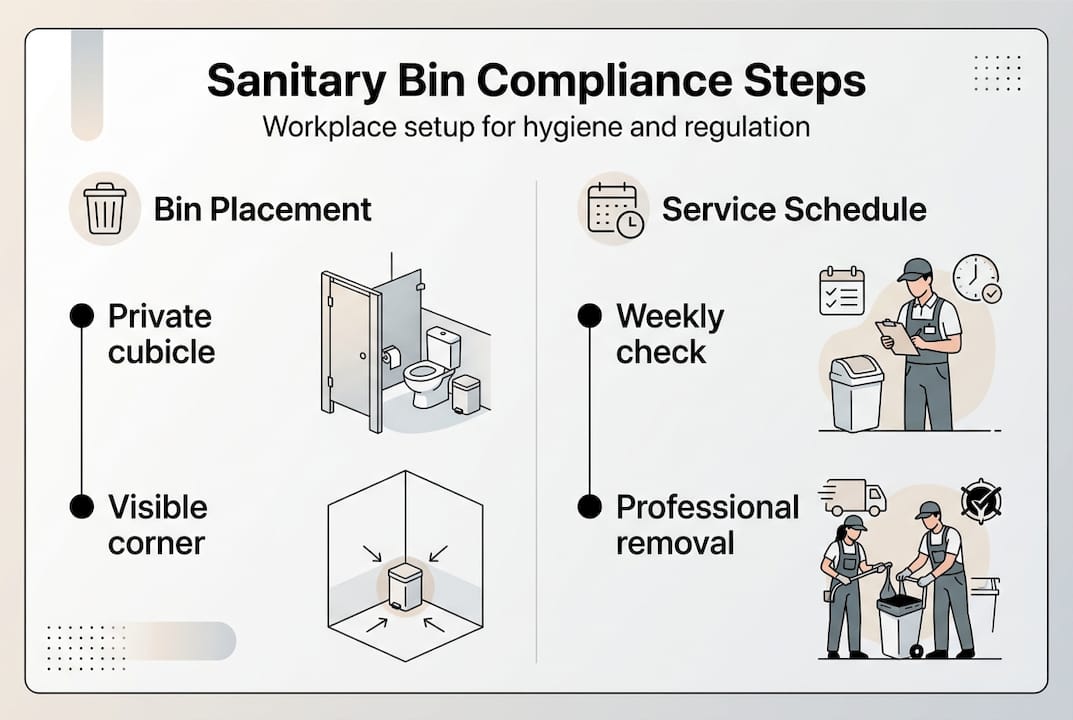
Strategic placement balances accessibility, privacy, and maintenance efficiency. Every female toilet cubicle should contain a sanitary bin, positioned within easy reach but not obstructing movement. Unisex facilities require bins in all cubicles, regardless of typical user demographics. Placement height matters: bins mounted or positioned too high create accessibility issues, while floor-level units may suffer from cleaning complications and appear less hygienic.

Pro Tip: Position bins in corners or against walls where they remain visible and accessible but don’t dominate the cubicle space, and ensure cleaning staff can reach them easily during servicing rounds without awkward manoeuvring.
| Bin type | Typical capacity | Best location | Key advantage |
|---|---|---|---|
| Pedal-operated | 10-20 litres | Floor-mounted in cubicle corner | Hands-free, hygienic operation |
| Wall-mounted | 8-15 litres | Cubicle wall at accessible height | Space-saving, easy cleaning |
| Automatic sensor | 12-18 litres | High-traffic facilities | Premium touchless hygiene |
| Freestanding | 15-25 litres | Larger cubicles, accessible facilities | Flexible positioning |
Consider traffic patterns and usage frequency when determining bin quantities and sizes. High-traffic facilities like shopping centres, office towers, and educational institutions need larger capacity bins or more frequent servicing. Smaller workplaces with fewer female employees may manage with compact units serviced on standard weekly schedules. Always err toward slightly more capacity than minimum estimates, as overflow situations create immediate compliance and hygiene problems.
Step-by-step guide to installing and maintaining sanitary bins
Proper installation and ongoing maintenance ensure your sanitary bin system delivers consistent compliance and hygiene protection. Follow these steps for successful implementation:
-
Assess each toilet facility and mark optimal bin locations based on cubicle layouts and accessibility requirements
-
Install wall-mounted brackets securely to studs or solid wall sections, ensuring weight capacity exceeds loaded bin mass
-
Position freestanding bins in marked locations, verifying stability and clearance for door operation
-
Line each bin with appropriate disposable liners, ensuring complete coverage of interior surfaces
-
Affix clear signage indicating accepted waste items and proper usage instructions
-
Document installation locations, bin types, and serial numbers for maintenance tracking
-
Arrange professional servicing contracts with providers in Brisbane, Gold Coast, or Melbourne covering regular waste removal and bin replacement
-
Train cleaning staff on daily inspection procedures and emergency response protocols
-
Establish reporting systems for maintenance issues, damage, or user misuse
-
Schedule initial compliance audit within two weeks of installation to verify correct setup
Regular servicing intervals maintain hygiene standards and prevent common problems. Most workplace facilities require weekly servicing as a baseline, though high-traffic locations may need twice-weekly or even daily attention. Servicing involves complete liner replacement, interior cleaning, exterior sanitising, and waste removal by licensed providers. Between professional services, daily inspections catch overflow situations, damage, or misuse before they escalate into compliance breaches or hygiene hazards.
Professional providers handle waste removal according to regulatory requirements, transporting sanitary waste to approved disposal facilities. These specialists understand regional regulations, maintain proper licensing, and carry appropriate insurance coverage. Attempting DIY waste removal risks compliance violations, exposes staff to unnecessary health hazards, and may void workplace insurance policies. The modest cost of professional servicing delivers substantial risk mitigation and peace of mind.
Pro Tip: Create a simple mobile checklist for cleaning staff covering bin status, liner condition, exterior cleanliness, and signage visibility, enabling quick daily inspections and immediate issue flagging through your facility management system.
Common mistakes undermine even well-planned sanitary bin systems:
-
Improper disposal of general waste contaminating sanitary bins and creating servicing complications
-
Overflowing bins resulting from inadequate servicing frequency or undersized units
-
Neglecting service schedules due to poor contract management or budget constraints
-
Insufficient staff training leading to inconsistent maintenance and delayed problem reporting
-
Missing or unclear signage causing user confusion and incorrect waste disposal
-
Poorly positioned bins creating accessibility issues or cleaning obstacles
Addressing these pitfalls requires ongoing attention and systematic processes. Regular audits identify emerging problems before they compromise compliance. Staff training sessions reinforce correct procedures and emphasise the importance of sanitary waste management. User education through clear signage and workplace communications reduces misuse and contamination. Partnering with experienced hygiene services providers in Brisbane or Melbourne delivers expert guidance and reliable servicing that keeps systems functioning optimally.
Verifying successful sanitary bin setup and troubleshooting common issues
Confirming proper installation and maintaining ongoing compliance requires systematic verification and proactive problem-solving. Use this checklist to validate your sanitary bin setup:
-
Every female and unisex toilet cubicle contains an appropriately sized sanitary bin
-
Bins meet Australian standards for workplace sanitary waste disposal
-
Placement allows easy user access without obstructing cubicle movement
-
Clear signage indicates accepted waste items and usage instructions
-
Professional servicing contracts cover all installed bins at appropriate frequencies
-
Cleaning staff understand daily inspection procedures and reporting protocols
-
Documentation tracks bin locations, types, servicing schedules, and maintenance history
-
Emergency contact information for servicing provider remains readily accessible
-
Backup supplies of liners and cleaning materials stay stocked for routine maintenance
Proper segregation and disposal of sanitary items prevent hygiene risks and compliance breaches, making verification essential for ongoing success. Common issues arise despite careful planning, requiring prompt identification and resolution.
Bin overflow represents the most frequent problem, typically resulting from inadequate servicing frequency or undersized units for actual usage levels. Signs include visible waste above bin rims, unpleasant odours in toilet facilities, and user complaints. Solutions involve increasing servicing frequency, upgrading to larger capacity bins, or installing additional units in high-traffic cubicles. Temporary overflow situations require immediate attention: cleaning staff should contact servicing providers for emergency collection and implement interim measures to maintain hygiene.
Contamination with general waste creates servicing complications and hygiene concerns. Users sometimes mistake sanitary bins for general waste receptacles, particularly when signage lacks clarity or placement suggests dual purpose. Address contamination through improved signage emphasising accepted items only, user education campaigns, and strategic repositioning away from general waste bins to reduce confusion. Persistent contamination may require additional general waste bins in cubicles, though this increases cleaning workload.
| Setup aspect | Correct implementation | Common problem | Solution |
|---|---|---|---|
| Bin placement | Accessible corner position, clear of door swing | Obstructs cubicle access or cleaning | Reposition to corner, verify clearances |
| Servicing frequency | Weekly or as needed for traffic levels | Overflow between services | Increase frequency, upgrade capacity |
| Waste segregation | Only sanitary items disposed | General waste contamination | Improve signage, user education |
| Maintenance | Daily inspections, prompt issue reporting | Delayed problem identification | Implement checklist system, staff training |
User misuse extends beyond contamination to include vandalism, inappropriate disposal attempts, and hygiene negligence. Security cameras in public areas (never inside cubicles) deter deliberate misuse in accessible facilities. Robust bin construction withstands normal wear and occasional rough handling. Regular inspections catch damage early, allowing repairs before bins become unusable or create safety hazards.
Routine audits maintain long-term compliance and system effectiveness. Monthly reviews examine servicing records, maintenance logs, and user feedback to identify trends and improvement opportunities. Quarterly assessments verify continued regulatory compliance, evaluate provider performance, and adjust servicing frequencies based on seasonal usage variations. Annual comprehensive audits benchmark your sanitary waste management against industry standards and identify strategic upgrades or process improvements.
Staff and user education reduces problems substantially. Onboarding programmes for new employees should cover proper sanitary bin usage as part of facility orientation. Periodic refresher communications reinforce correct procedures and remind users of their role in maintaining workplace hygiene. Cleaning staff benefit from ongoing training covering new products, updated procedures, and troubleshooting techniques. Investing in education delivers returns through fewer maintenance issues, better compliance outcomes, and improved facility hygiene.
Exploring the hygiene advantage of bin replacement versus traditional servicing models offers additional insights into optimising your sanitary waste management approach for maximum hygiene protection and operational efficiency.
Hygiene services providers for sanitary bins in Brisbane, Gold Coast, and Melbourne
Establishing compliant sanitary bin systems becomes straightforward with expert support from experienced regional providers. Ozifresh Hygiene Services specialises in comprehensive sanitary waste solutions across Brisbane, the Gold Coast, and Melbourne, bringing over 40 years of industry expertise to facilities managers and business owners. Their tailored approach addresses the unique requirements of commercial workplaces, healthcare facilities, educational institutions, and hospitality venues.
Ozifresh offers complete sanitary bin programmes covering supply, installation, regular servicing, and compliance support. Their Brisbane hygiene services, Gold Coast hygiene services, and Melbourne hygiene services deliver consistent quality across all locations, supported by local teams who understand regional regulatory nuances. Flexible servicing schedules accommodate varying usage levels, from weekly standard service to high-frequency programmes for busy facilities.
Exploring professional sanitary bin solutions reveals how partnering with established providers simplifies compliance, reduces management burden, and ensures reliable hygiene protection for your workplace environment.
FAQ
How often should sanitary bins be serviced?
Sanitary bins require servicing weekly as a baseline frequency for most workplace environments, though high-traffic facilities may need twice-weekly or daily attention. Usage levels, bin capacity, and occupancy patterns determine optimal servicing intervals. Professional providers assess your specific requirements and recommend appropriate schedules that maintain hygiene standards while optimising cost efficiency.
What items can be disposed of in sanitary bins?
Sanitary bins accept pads, tampons, panty liners, and incontinence products exclusively, as these items require specialised hygienic disposal. General waste, food packaging, paper towels, nappies, and other rubbish must go into standard waste receptacles to maintain proper segregation. Clear signage helps users understand accepted items and prevents contamination that complicates servicing and compromises hygiene.
Are sanitary bins required in male toilets?
Sanitary bins are mandatory in female and unisex toilet facilities where sanitary items require disposal, but generally not in male-only toilets unless incontinence products are commonly used. Workplace demographics and accessibility requirements guide decisions about male toilet provisions. Facilities serving diverse populations or older workers may benefit from sanitary bins in all toilet types to accommodate varying needs.
How do I choose a sanitary bin provider in my region?
Select providers with proven experience servicing your specific city, whether Brisbane, Gold Coast, or Melbourne, as local expertise ensures reliable service delivery and regulatory knowledge. Evaluate compliance guarantees, flexible servicing plans, transparent pricing structures, and client testimonials when comparing options. Providers offering customised solutions, responsive support, and comprehensive hygiene programmes deliver superior long-term value beyond basic waste removal services.
Recommended
Ready for a cleaner, safer workplace?
Contact our team today to discuss hygiene services for your business in Brisbane, Melbourne or the Gold Coast.