Environmental hygiene advantages for facility managers
TL;DR:
- Maintaining environmental hygiene in facilities reduces illness-related absenteeism and enhances operational efficiency. Implementing standards-aligned cleaning protocols improves compliance, extends asset life, and supports sustainability goals. Structured hygiene programs deliver measurable health, regulatory, and cost benefits within three months.
Environmental hygiene advantages are the measurable gains in health outcomes, regulatory compliance, and operational efficiency that result from maintaining clean, hygienic commercial environments. For facility managers and administrators, these gains are not abstract. A well-executed hygiene programme directly reduces illness-related absenteeism, satisfies obligations under the WHS Act 2011 and AS/NZS 3733, and builds the kind of occupant confidence that supports lease renewals and client retention. The industry term for this discipline is environmental hygiene management, and it covers everything from surface disinfection protocols to air quality controls and waste disposal systems. Understanding the full scope of these benefits is the first step toward building a programme that pays for itself.
1. Environmental hygiene advantages: reduced illness and absenteeism
Systematic daily cleaning is the single most effective tool for cutting illness-related absenteeism in commercial facilities. A 2021 study found that structured cleaning protocols delivered a 48% reduction in respiratory illness absenteeism over 12 months. That figure translates directly into recovered productivity and lower costs from temporary staffing or project delays.
The mechanism is straightforward. High-touch surfaces such as door handles, lift buttons, shared keyboards, and bathroom fixtures carry the highest pathogen load in any facility. Prioritising these surfaces for daily disinfection, rather than applying hospital-level protocols everywhere, delivers the greatest return on cleaning spend. This targeted approach is what separates effective hygiene management from routine tidying.
Staff morale also responds to visible cleanliness. Occupants who work in consistently clean environments report higher job satisfaction and are less likely to raise formal complaints about their workspace. For facility managers, fewer complaints mean fewer reactive management cycles and more time spent on planned maintenance.
- Daily disinfection of high-touch surfaces reduces pathogen transmission most efficiently
- Documented cleaning schedules support audit trails and WHS compliance
- Consistent hygiene standards reduce staff turnover linked to poor working conditions
- Ventilation controls, combined with surface cleaning, address both airborne and contact transmission
Pro Tip: Schedule high-touch surface disinfection at the start and end of each business day, not just during general cleaning rounds. This doubles the protection window during peak occupancy hours.
2. Green cleaning cuts environmental cost without compromising hygiene
Sustainable cleaning methods deliver the same hygiene outcomes as traditional approaches while significantly reducing environmental impact. Green cleaning methods reduce chemical emissions by 83% and global warming potential by 50% compared to conventional cleaning products. For facilities with sustainability reporting obligations under Australian climate disclosure frameworks, this is a material operational advantage.
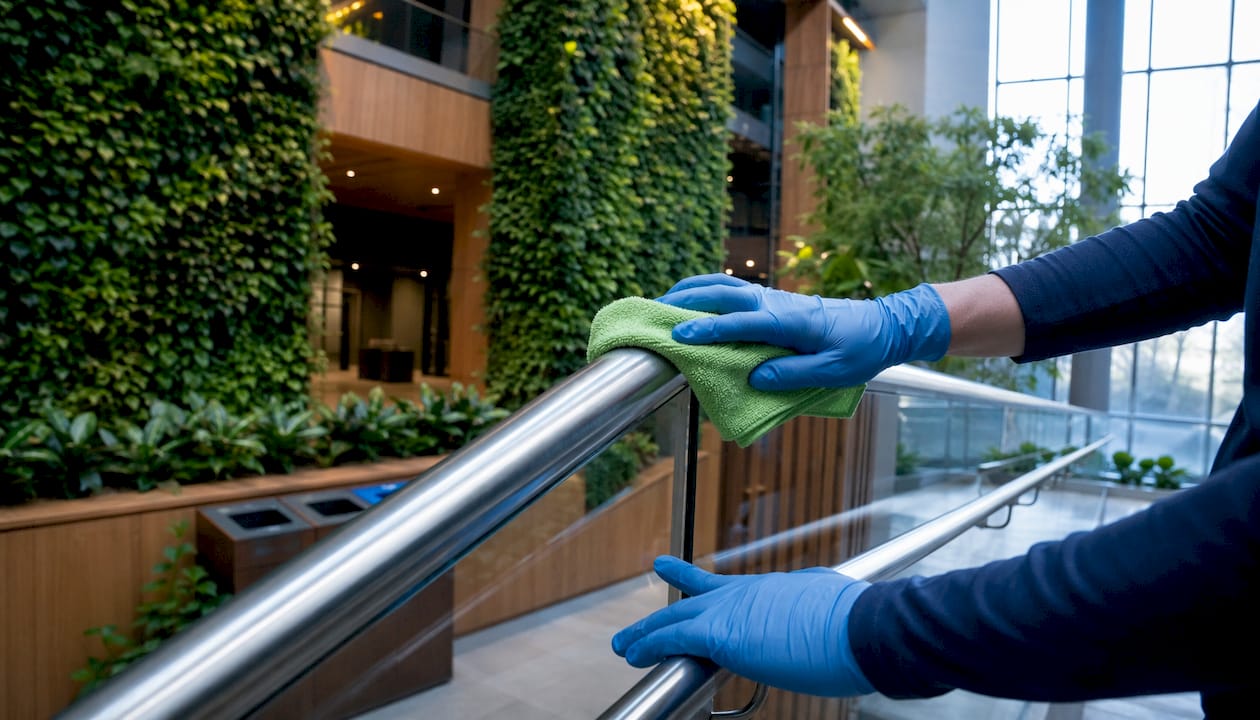
Microfibre technology is the most practical entry point for facilities transitioning to greener cleaning. Microfibre cloths and mops reduce chemical use by up to 99% and water consumption by 75% compared to traditional methods, and quality microfibre products last 500 or more wash cycles. The cost savings compound over time while supporting sustainability ratings such as NABERS and Green Star.
Switching to low-VOC (volatile organic compound) cleaning chemicals also improves indoor air quality for occupants. This matters because poor air quality is a documented driver of reduced cognitive performance and increased sick leave. Cleaner air is not just an environmental benefit. It is a productivity benefit.
| Cleaning method | Chemical reduction | Water reduction | Hygiene outcome |
|---|---|---|---|
| Traditional mop and bucket | Baseline | Baseline | Standard |
| Microfibre technology | Up to 99% | Up to 75% | Equivalent or better |
| Low-VOC chemical products | 83% emissions reduction | Moderate | Equivalent |
| HEPA filtration vacuums | Reduces airborne particulates 30–45% | Minimal | Improved air quality |
Pro Tip: When procuring cleaning consumables, request Safety Data Sheets for all chemical products and cross-reference them against the green cleaning guide for 2026 to confirm VOC compliance before signing supply contracts.
3. Compliance with Australian hygiene standards and workplace regulations
Meeting Australian hygiene standards is a legal obligation, not a best-practice option. The WHS Act 2011 requires employers to eliminate or minimise health risks so far as is reasonably practicable, and hygiene management is a core mechanism for meeting that duty. Facilities that align their cleaning programmes with AS/NZS 3733 (textile floor coverings) and AS 1668.2 (ventilation and air conditioning) see measurable improvements in indoor air quality and occupant satisfaction within 90 days of adoption.
The 2026 biological hazards code of practice raises the compliance bar further. Workplaces must now maintain a biological hazards register and implement documented daily high-touch disinfection and ventilation controls. These requirements are inspector focus areas, meaning facilities without documented protocols face direct regulatory exposure.
- Establish a written cleaning programme that references AS/NZS 3733 and AS 1668.2 as baseline standards
- Create and maintain a biological hazards register updated at least quarterly
- Document daily disinfection of high-touch surfaces with time stamps and staff sign-offs
- Implement ventilation checks aligned with AS 1668.2 requirements
- Conduct internal audits every 90 days and address findings before external inspections
Environmental Management Systems aligned with AS/NZS ISO 14001 provide a structured framework for audit-ready sustainability compliance and targeted reduction of chemical use and waste. Facilities that adopt this standard gain a defensible position in both WHS and environmental audits. For healthcare settings, the compliance stakes are even higher, and hygiene compliance strategies tailored to Australian regulations provide a practical starting point.
4. Operational efficiency gains from structured hygiene programmes
Structured cleaning reduces management workload in ways that ad-hoc approaches cannot replicate. Scheduled cleaning programmes eliminate the reminder cycles that consume facility manager time, replacing reactive follow-up with predictable, documented service delivery. This shift frees management capacity for planned maintenance and capital works planning.
Office assets last longer in clean environments. Carpets, upholstery, hard flooring, and HVAC filters all degrade faster when exposed to accumulated dust, biological matter, and chemical residue from inadequate cleaning. Extending asset lifespan by even 12 months across a large facility produces savings that dwarf the cost of a professional hygiene contract.
Client and tenant perceptions are also shaped by visible hygiene standards. Prospective tenants assess cleanliness during inspections, and existing tenants cite facility condition as a factor in lease renewal decisions. A clean facility is a retention tool. The impact of cleanliness on well-being extends beyond health metrics into the commercial relationship between facility managers and the organisations they serve.
Cognitive performance research adds another dimension. Clean, well-ventilated environments support concentration and reduce fatigue. For facilities housing knowledge workers, this means hygiene investment has a direct line to the productivity of every person in the building.
5. How high-touch surface prioritisation maximises hygiene return
High-touch surface prioritisation is the most cost-effective hygiene strategy available to facility managers. Applying intensive disinfection protocols to every surface in a facility wastes resources and creates unnecessary chemical exposure for occupants. Concentrating effort on door handles, light switches, shared equipment, and bathroom fixtures addresses the surfaces responsible for the majority of pathogen transmission.
Switching to HEPA filtration vacuums and low-VOC chemicals reduces airborne particulates by 30–45%. This improvement is measurable through air quality monitoring and directly supports compliance with AS 1668.2 ventilation standards. Facilities in healthcare and education sectors, where vulnerable populations are present, benefit most from this targeted approach.
Routine cleaning and ventilation baseline controls should be implemented proactively before specific hazard assessments are completed. Waiting for a formal risk assessment before acting on obvious hygiene gaps creates regulatory and health exposure. The baseline controls required under the 2026 code are not onerous. They are the foundation of any credible hygiene programme.
For facilities managing medical waste streams, integrating sharps disposal and sanitary waste management into the broader hygiene programme closes a compliance gap that surface cleaning alone cannot address. In healthcare environments, high-touch area prioritisation also supports resource allocation decisions that balance safety with operational cost.
6. Sustainability as a business enabler, not a compliance burden
Sustainability drives operational efficiency by cutting consumable costs, supporting workforce safety, and improving financial margins. Facility managers who treat sustainability as a business enabler rather than a reporting obligation extract more value from their hygiene programmes. The cost case is clear: efficient machinery, smarter chemical selection, and transparent reporting all reduce spend while improving outcomes.
Transparent sustainability reporting also builds stakeholder confidence. Clients, tenants, and building owners increasingly expect evidence of responsible facility management. A documented green cleaning programme, aligned with NABERS or Green Star criteria, provides that evidence in a format that supports commercial negotiations and tender responses.
The benefits of environmental hygiene management compound over time. Reduced chemical costs, lower absenteeism, extended asset life, and stronger compliance positions all contribute to a facility that costs less to run and performs better for its occupants. This is the core argument for treating hygiene as infrastructure, not overhead.
Key takeaways
Environmental hygiene management delivers measurable gains in health, compliance, and operational efficiency when facility managers apply structured, standards-aligned cleaning programmes.
| Point | Details |
|---|---|
| Absenteeism reduction | Systematic daily cleaning cuts respiratory illness absenteeism by up to 48%. |
| Green cleaning savings | Microfibre technology reduces chemical use by up to 99% and water use by up to 75%. |
| Compliance obligations | The 2026 biological hazards code requires documented daily disinfection and a biological hazards register. |
| Asset lifespan | Clean environments extend the life of carpets, HVAC filters, and office assets, reducing replacement costs. |
| Sustainability reporting | AS/NZS ISO 14001 alignment supports audit-ready compliance and strengthens tender and lease negotiations. |
Why I think most facilities underestimate the financial case for hygiene
After working across commercial, healthcare, and educational facilities for many years, the pattern I see most often is this: facility managers understand that hygiene matters, but they budget for it as a cost line rather than an investment. That framing costs them money.
The absenteeism numbers alone should shift the calculation. A 48% reduction in illness-related absences is not a marginal improvement. For a facility with 200 staff, that figure represents weeks of recovered productive time per year. When you add reduced asset replacement costs, lower regulatory risk, and stronger tenant retention, the return on a professional hygiene programme is not difficult to quantify.
The sustainability angle is where I see the most missed opportunity. Managers who have not yet adopted microfibre technology and low-VOC chemicals are paying more for worse outcomes. The transition is not complex, and the savings are immediate. The benefits of environmental hygiene in healthcare settings illustrate this clearly: the same principles apply in any facility where occupant health and regulatory compliance intersect.
My practical advice is to start with a 90-day audit cycle. Measure air quality, surface hygiene, and absenteeism rates before and after implementing a structured programme. The data will make the business case for you, and it will give you the evidence base to defend your hygiene budget in any review.
— Ozifresh
Ozifresh hygiene services for Australian facilities
Ozifresh has delivered professional hygiene services across Brisbane, the Gold Coast, and Melbourne for over 40 years. The company’s sanitary products and hygiene services cover the full scope of facility hygiene needs, from hand sanitiser and soap dispensers to sanitary bins, sharps disposal, and air freshening systems. Every service is designed to support WHS Act 2011 compliance and the 2026 biological hazards code requirements. Ozifresh works across commercial workplaces, healthcare facilities, educational institutions, hospitality venues, and residential complexes, tailoring programmes to the specific regulatory and operational needs of each sector. For facility managers seeking a single, accountable hygiene partner, Ozifresh provides the documentation, service consistency, and compliance support that structured hygiene management demands.
FAQ
What are the main environmental hygiene advantages for facilities?
The primary advantages are reduced illness-related absenteeism, improved regulatory compliance, extended asset lifespan, and lower operational costs from sustainable cleaning methods.
How does hygiene affect health in commercial facilities?
Systematic daily cleaning and high-touch surface disinfection reduce pathogen transmission, cutting respiratory illness absenteeism by up to 48% over 12 months.
What Australian standards apply to workplace hygiene?
The WHS Act 2011, AS/NZS 3733, AS 1668.2, and the 2026 biological hazards code of practice are the primary standards governing workplace hygiene and cleaning programmes in Australia.
Does green cleaning deliver the same hygiene outcomes as traditional methods?
Green cleaning methods match traditional hygiene outcomes while reducing chemical emissions by 83% and global warming potential by 50%, making them the preferred choice for compliance-focused facilities.
How quickly do hygiene improvements show measurable results?
Facilities aligned with Australian Standards typically report measurable improvements in indoor air quality and occupant satisfaction within 90 days of adopting structured cleaning protocols.
Recommended
Ready for a cleaner, safer workplace?
Contact our team today to discuss hygiene services for your business in Brisbane, Melbourne or the Gold Coast.