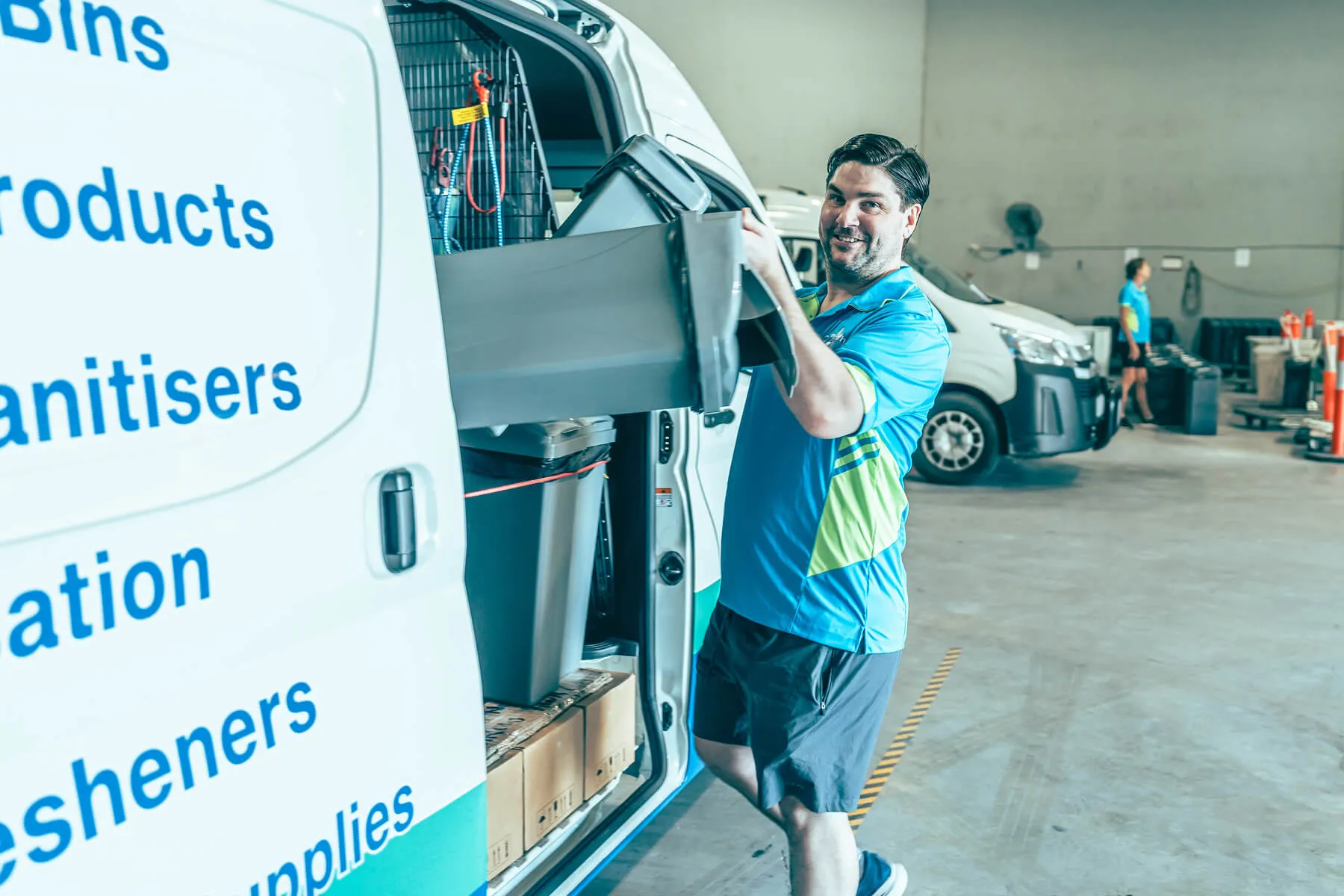
B2B hygiene providers: value for safe, compliant facilities

Choosing the wrong hygiene provider costs more than money. It can mean failed audits, infection outbreaks, and regulatory penalties that damage your facility’s reputation for years. The Australian cleaning supplies distributors market sits at $1.5 billion in 2026, yet commercial cleaning demand has softened while healthcare hygiene costs continue to climb. That gap tells a clear story: not all hygiene partnerships deliver equal value, and facility managers who treat providers as interchangeable are taking on serious, avoidable risk.
Table of Contents
- What are B2B hygiene providers and why do they matter?
- Key roles and responsibilities of hygiene providers
- Why compliance and risk matter: The Australian context
- How to choose the right B2B hygiene partner
- Measuring success: Hygiene provider KPIs and real outcomes
- Partner with a trusted B2B hygiene specialist
- Frequently asked questions
Key Takeaways
| Point | Details |
|---|---|
| Strategic partnership | Choosing the right B2B hygiene provider is vital for compliance and a safe workplace. |
| Compliance made easy | Specialist providers help facilities meet Australian hygiene regulations and avoid costly penalties. |
| Measured results | Track KPIs like response time and audit pass rates to ensure ongoing provider value. |
| Smart selection process | Use a robust checklist to compare capabilities, pricing, and proven reliability—never just cost. |
What are B2B hygiene providers and why do they matter?
B2B hygiene providers are specialist companies that supply, install, service, and manage hygiene systems across commercial and institutional facilities. They are not the same as your in-house cleaning crew. Where a cleaning team handles day-to-day tidying, a B2B hygiene provider manages the infrastructure behind safe, compliant environments: sanitary disposal units, hand hygiene stations, air freshener systems, sharps containers, and the regulatory frameworks that govern all of it.
The facilities that rely on these providers span nearly every sector. Offices, hospitals, aged care homes, retail centres, service stations, schools, and hospitality venues all depend on consistent, compliant hygiene systems to protect occupants and meet legal obligations. A missed service or a non-compliant product can trigger an audit failure or, worse, a preventable health incident.
Core services from a quality B2B hygiene provider typically include:
- Product supply and installation of sanitary, hand hygiene, and waste disposal units
- Scheduled servicing with documented visit records
- Compliance training and regulatory update briefings for facility staff
- Tailored hygiene programmes matched to your sector’s specific requirements
- Emergency response for urgent servicing or product failures
It is worth noting that commercial cleaning demand has declined post-pandemic, but healthcare cleaning requirements and associated costs remain elevated. This divergence means providers who specialise in compliance-heavy environments are more valuable than ever. You can stay across industry news on hygiene trends to understand how these shifts affect your procurement decisions, and explore sanitary product solutions that align with current sector demands.
“The best hygiene providers do not just drop off products. They act as compliance partners, keeping your facility audit-ready and your occupants protected year-round.”
Key roles and responsibilities of hygiene providers
Understanding who B2B hygiene providers are is one thing. Knowing exactly what they are responsible for in your facility is another. Their day-to-day remit is broader than most facility managers initially expect.
A specialist provider’s core responsibilities typically follow this sequence:
- Needs assessment to map your facility’s hygiene requirements against sector regulations
- Product selection and installation matched to occupancy levels and compliance standards
- Scheduled servicing visits with signed documentation for audit trails
- Regulatory monitoring to flag changes in WHS, infection control, or waste disposal rules
- Reporting and audit support to help your team pass inspections with confidence
Compliance responsibilities are particularly significant in healthcare and aged care. Healthcare cleaning rates start from $55 per hour per cleaner in major cities, reflecting the specialised skill and compliance knowledge required. That cost is justified when you consider the consequences of non-compliance in environments like nursing homes, where infection control failures carry serious legal and human consequences.
Here is a direct comparison between managing hygiene in-house versus engaging a specialised provider:
| Factor | In-house management | Specialised provider |
|---|---|---|
| Compliance knowledge | Limited, requires ongoing training | Current, sector-specific expertise |
| Audit documentation | Often inconsistent | Systematic, visit-by-visit records |
| Product quality | Variable, price-driven | Vetted, reputable suppliers |
| Regulatory updates | Reactive | Proactive, built into service |
| Cost predictability | Unpredictable | Fixed contract pricing |
| Flexibility | Low, tied to staff availability | High, scheduled and on-call |
For apartment complexes and service stations, where high foot traffic meets strict hygiene obligations, the specialised provider model consistently outperforms in-house approaches on both compliance and cost efficiency.
Pro Tip: Before signing any contract, ask your prospective provider for their compliance certification documents and a sample audit report from a comparable facility. A provider who cannot produce these quickly is a provider worth reconsidering.
Why compliance and risk matter: The Australian context
Australia’s Work Health and Safety framework places direct obligations on facility managers to maintain safe environments for workers and visitors. Hygiene is not optional. It is a legal requirement, and the consequences of falling short range from improvement notices to significant financial penalties.

Post-pandemic hygiene regulations have become noticeably stricter, adding real pressure on facilities to demonstrate documented compliance rather than simply claiming it. Sector-specific rules add further complexity. Healthcare facilities must meet infection control standards. Food-adjacent businesses face food safety legislation. Residential complexes carry shared-space obligations under strata and tenancy law.
The real-world risks of non-compliance include:
- Regulatory fines from SafeWork or state health authorities
- Failed audits leading to operational restrictions or licence suspension
- Infection outbreaks that generate liability claims and reputational damage
- Lost contracts when corporate clients or government bodies require compliance evidence
- Staff turnover driven by unsafe or unhygienic working conditions
For retail and theatre venues, where public-facing hygiene is visible and scrutinised, a single incident can generate media attention that far outweighs the cost of proper hygiene servicing. The maths are straightforward: investing in a qualified provider is far cheaper than managing the fallout from a compliance failure.
Facility managers across Brisbane, Gold Coast, and Melbourne should also factor in local regulatory nuances. Each state has its own WHS codes and sector-specific guidelines, and a provider with genuine local experience will already understand these. Exploring tailored industry hygiene solutions is a practical starting point for mapping your obligations to the right service model.
How to choose the right B2B hygiene partner
Selecting a hygiene provider is a procurement decision with long-term consequences. The lowest quote rarely reflects the best value, and a provider who cannot demonstrate compliance experience is a liability, not an asset.
Follow this practical selection process:
- Define your facility’s needs by sector, occupancy, and specific compliance obligations
- Shortlist providers with documented experience in your industry and region
- Request compliance credentials including certifications, insurance, and audit history
- Compare service scope, not just price, across shortlisted providers
- Check references from facilities similar to yours in size and sector
- Review contract terms for flexibility, exit clauses, and emergency response commitments
Providers servicing Brisbane, Gold Coast, and Melbourne must align with local compliance requirements and cost realities, which vary meaningfully between states. A provider based interstate with no local presence may struggle to meet response time expectations or stay current with Queensland or Victorian regulatory updates.

Here is a realistic guide to what B2B hygiene contracts might look like across different facility types:
| Facility type | Typical services included | Estimated monthly range |
|---|---|---|
| Small office (under 50 staff) | Hand hygiene, sanitary disposal, air fresheners | $150 to $350 |
| Medium retail centre | Sanitary, hand hygiene, waste disposal, reporting | $400 to $900 |
| Healthcare or aged care facility | Full compliance programme, sharps, infection control | $800 to $2,500+ |
| Service station or hospitality venue | Sanitary, odour control, consumables, audits | $300 to $700 |
For office hygiene programmes, the investment is modest relative to the compliance and staff wellbeing benefits. Facilities in Brisbane can access local servicing with fast response times, which matters when a unit fails or a scheduled visit needs rescheduling.
Pro Tip: Always ask prospective providers about their emergency response protocol and what happens if their primary supplier has a stock shortage. A provider without a clear backup plan introduces supply risk into your compliance programme.
Measuring success: Hygiene provider KPIs and real outcomes
Signing a contract is the beginning, not the finish line. Ongoing value from a hygiene provider requires active measurement and regular review. Without clear key performance indicators, it is easy to miss early signs that a provider is underperforming.
The KPIs that matter most for facility managers include:
- Service visit compliance rate: Are scheduled visits happening on time, every time?
- Audit pass rate: Is your facility consistently meeting inspection standards?
- Response time for urgent calls: How quickly does the provider attend to failures or emergencies?
- User feedback scores: Are staff and visitors reporting clean, functional hygiene facilities?
- Consumable availability: Are dispensers stocked and units operational between visits?
- Reporting quality: Are visit records detailed enough to support an audit trail?
Consider a mid-sized aged care facility in Melbourne that switched from an ad-hoc in-house approach to a structured provider relationship. Within six months, audit pass rates improved, infection-related incident reports dropped, and facility managers spent significantly less time chasing compliance documentation. The provider handled regulatory updates proactively, flagging a change in sharps disposal requirements before it became an issue.
Strong provider partnerships deliver quantifiable benefits, including reduced outbreak incidents, higher audit pass rates, and genuine operational confidence for facility teams.
“Facilities that treat hygiene provider relationships as strategic partnerships, rather than transactional contracts, consistently outperform peers on compliance and occupant satisfaction metrics.”
Regular quarterly reviews with your provider, using these KPIs as the agenda, create a continuous improvement loop. Check latest industry outcomes to benchmark your facility’s performance against sector trends, and review how sporting facilities and gyms are applying similar frameworks to high-traffic, high-risk environments.
Partner with a trusted B2B hygiene specialist
Ozifresh has delivered professional hygiene solutions across Brisbane, the Gold Coast, and Melbourne for over 40 years. Whether you manage a nursing home with strict infection control obligations, a busy office environment where staff wellbeing drives productivity, or a service station where public hygiene is constantly on display, we have the sector experience and local knowledge to keep your facility compliant and your occupants protected. Our team handles product supply, scheduled servicing, regulatory updates, and audit documentation so you can focus on running your facility with confidence. Reach out to Ozifresh today to request a tailored quote or a free facility hygiene assessment.
Frequently asked questions
What’s the difference between a hygiene provider and a cleaning crew?
A hygiene provider delivers specialised compliance support, product management, and ongoing regulatory guidance, while a cleaning crew focuses on physical cleaning tasks. Compliance expectations in 2026 mean facilities need both, but they serve distinct functions.
How can I ensure my provider meets Australian regulations?
Request their compliance certifications, sector-specific audit history, and references from comparable facilities. Regulatory compliance is an explicit provider responsibility in the current market, and any reputable provider should be able to demonstrate it clearly.
Is switching providers difficult if I’m not happy?
Most commercial hygiene contracts include a transition period and exit provisions. Request full service and visit reports from your current provider before switching, as this data makes onboarding a new provider significantly smoother.
Are hygiene providers cost-effective for smaller facilities?
Yes. Scalable service models mean smaller facilities can access professional compliance support without paying for services they do not need. 2026 cost models for commercial facilities align well with flexible, right-sized servicing arrangements that outperform patchwork in-house approaches on both cost and compliance.
Recommended
Ready for a cleaner, safer workplace?
Contact our team today to discuss hygiene services for your business in Brisbane, Melbourne or the Gold Coast.