
Waste management in hygiene: a guide for institutions
TL;DR:
- Effective hygiene waste management involves proper segregation, secure storage, and documented transfer processes to prevent disease transmission. Compliance with evolving regulations, such as digital traceability and proper documentation, is essential for maintaining hygiene and avoiding legal liabilities. Regular staff training and system audits are critical to ensuring institutional waste handling remains safe and effective.
Waste management in hygiene is the systematic process of segregating, storing, transporting, and disposing of all waste types to prevent disease transmission and maintain regulatory compliance. For businesses, schools, and healthcare facilities, this is not a background operational task. It is a direct infection control measure that determines whether your environment is safe or a source of preventable harm. Programmes like WASH (Water, Sanitation and Hygiene), frameworks such as Duty of Care obligations, and digital traceability tools like DIWASS are now central to how institutions manage waste hygienically and meet their legal obligations.
What waste management practices ensure hygiene and safety?
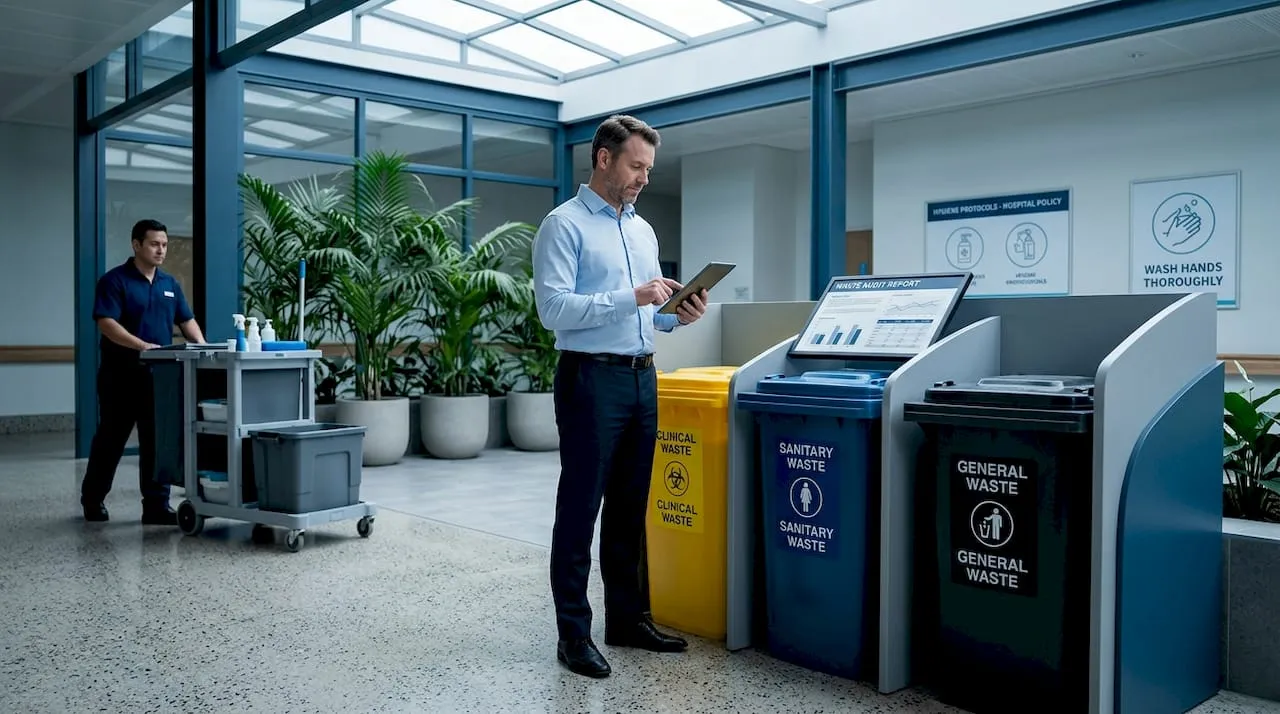
Effective hygiene waste management begins with segregation. Clinical waste, sanitary waste, sharps, nappies, and general municipal refuse each carry different contamination risks and require separate containment from the point of generation. Mixing waste streams at source is the single most common cause of downstream hygiene failures in institutional settings.
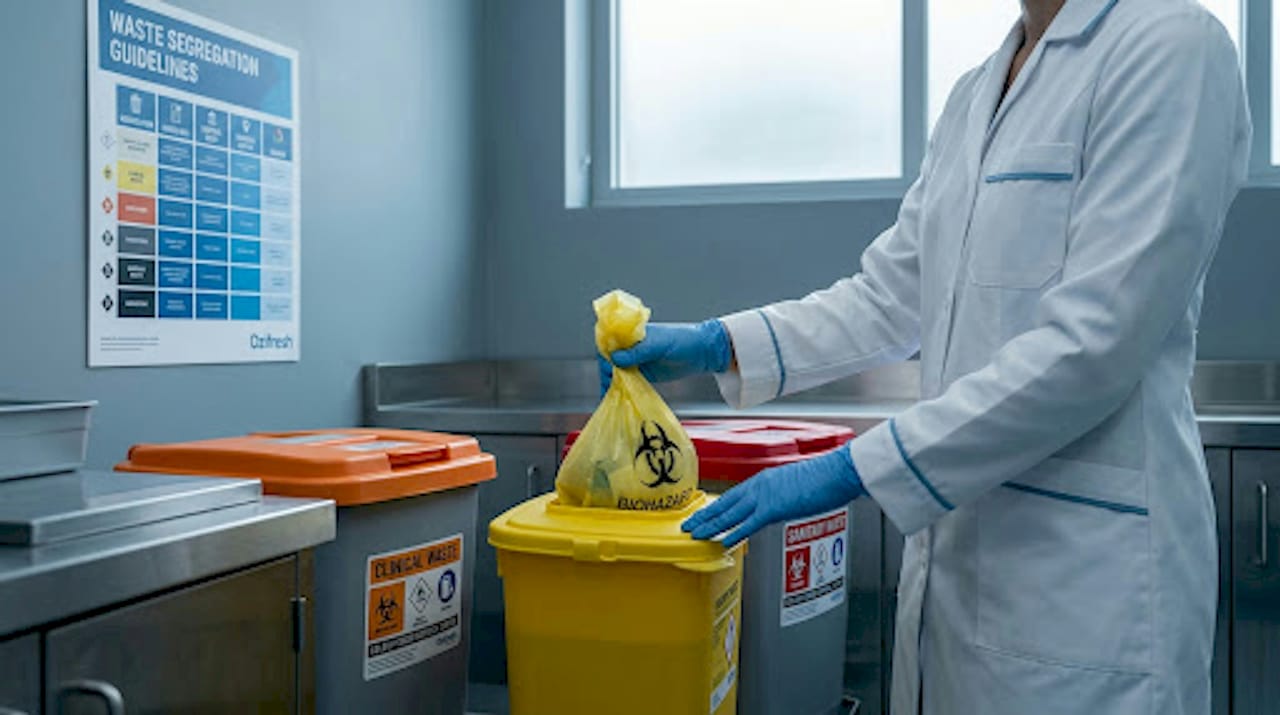
Safe storage is the next critical control point. Containers must be clearly labelled, leak-proof, and positioned to prevent unauthorised access or accidental contact. Storage limits prevent litter, spillages, and odour, directly reducing hygiene risk at the point where most contamination incidents begin. Sharps boxes and dedicated sanitary disposal bins are not optional extras. They are the physical infrastructure that makes segregation possible.
Transport and handling protocols matter just as much as storage. Waste should move through your facility in sealed, labelled containers along defined routes that avoid food preparation areas, patient zones, or high-traffic corridors. Staff who handle waste must wear appropriate personal protective equipment and follow documented procedures every time, not just during inspections.
Training is where many institutions fall short. Staff education and quality management systems are among the highest-impact levers for improving waste segregation and hygiene outcomes in healthcare and institutional settings. A well-designed bin system fails if the people using it do not understand why segregation matters or what goes where.
Key waste management practices for institutional settings include:
- Segregate waste at source into clinical, sanitary, sharps, nappy, and general streams
- Use colour-coded, labelled containers that meet Australian standards for each waste type
- Store waste in secure, ventilated areas with defined capacity limits to prevent overflow
- Follow documented transport routes within the facility to avoid cross-contamination
- Conduct regular waste audits to identify gaps in segregation and disposal compliance
Pro Tip: Schedule waste audits quarterly rather than annually. Gaps in segregation practice tend to develop gradually and are far easier to correct early than after a hygiene incident has occurred.
How do regulations and compliance frameworks shape waste handling?
Regulatory frameworks set the minimum standard for hygiene in waste disposal, and they are tightening. Institutions that treat compliance as a box-ticking exercise rather than an operational discipline consistently produce the worst hygiene outcomes.
The following compliance obligations apply directly to businesses, schools, and healthcare facilities managing waste:
- Duty of Care obligations. Waste facility operators must manage controlled waste safely, without causing pollution or harm to human health. This includes applying the waste hierarchy, from prevention through to disposal, and maintaining documented records of every waste transfer.
- Waste Transfer Notes. Every transfer of controlled waste requires a signed Waste Transfer Note describing the waste type, quantity, and the parties involved. Hygiene risks arise most commonly at storage and transfer interfaces, making this documentation a genuine hygiene control rather than administrative overhead.
- Consignment notes for hazardous waste. Clinical and sharps waste classified as hazardous requires consignment notes, a registered carrier, and return documentation confirming disposal. This traceability is an infection control practice, not simply paperwork.
- Extended Producer Responsibility (EPR). Expanded EPR frameworks for sanitary waste, as seen in policy developments in 2026, place responsibility on producers and institutions to manage collection and disposal. Localised incineration and composting near bulk generators improve both hygiene outcomes and policy compliance.
- Digital compliance platforms. Since 21 May 2026, the EU requires all PIC waste shipments to be processed via the DIWASS platform, delivering an estimated €1.4 million per year in administrative savings while strengthening traceability. This signals the direction of travel for digital waste compliance globally.
| Compliance requirement | What it means for your institution |
|---|---|
| Duty of Care obligations | Apply the waste hierarchy and document every waste transfer without exception |
| Waste Transfer Notes | Required for all controlled waste movements; failure creates legal and hygiene liability |
| Consignment notes | Mandatory for clinical and sharps waste; confirms registered carrier and verified disposal |
| EPR for sanitary waste | Producers and bulk generators share responsibility for collection and treatment |
| Digital traceability platforms | Electronic manifests and real-time records are becoming the compliance standard |
What health risks come from poor hygiene waste management?
Poor waste management in hygiene is a direct disease transmission pathway, not a theoretical risk. Improving sanitation services toward safely managed standards dramatically reduces diarrhoeal disease deaths, which remain one of the leading causes of preventable mortality globally. Every institution that mismanages waste contributes to this burden.
The contamination routes are specific and well-documented:
- Untreated excreta and sanitary waste in shared facilities spread faecal pathogens through surface contact, aerosol generation, and drainage overflow
- Menstrual and sanitary waste without discreet disposal creates blockages, odour, and direct skin contact risk for cleaning staff and other users
- Sharps waste disposed of in general bins causes needlestick injuries, with associated bloodborne pathogen exposure risks
- Overflowing or poorly sealed bins attract pests, which become secondary vectors for pathogen spread across the facility
“Safe and sufficient water, sanitation, and hygiene form a foundational condition for health, preventing multiple diseases through contamination-blocking waste management.” — WHO on WASH importance
The scale of the sanitary waste problem in under-resourced settings is instructive for institutional planners. 46% of people in humanitarian settings lack adequate disposal means for menstrual hygiene waste, increasing infection risks and environmental contamination. This is not a distant problem. It reflects what happens in any setting where discreet, accessible disposal infrastructure is absent.
Prevention requires integrating WASH principles into facility design and operations. Secure, clearly labelled disposal points at every generation site, combined with regular collection schedules and staff training on WHS hygiene responsibilities, are the practical controls that break contamination pathways before they cause harm.
Which tools and technologies support hygienic waste management?
The operational tools available for managing waste hygienically have advanced considerably, and institutions that rely on manual, paper-based systems alone are accepting unnecessary compliance risk.

Digital traceability is the most significant development. Platforms like DIWASS demonstrate that mandatory digital traceability systems strengthen enforcement and reduce the risk of unsafe waste handling in hygiene-sensitive settings. For healthcare facilities managing cross-border or outsourced waste streams, electronic manifests and real-time records are no longer optional. Vendor contracts must support these workflows to avoid hygiene breaches at the handover point.
Waste audit systems are the operational equivalent of a financial audit. Monitoring waste streams identifies gaps and targets for hygiene and safety improvements that would otherwise remain invisible until an incident occurs. SafetyCulture’s waste management frameworks, for example, provide structured audit templates that institutions can adapt to their specific waste streams and compliance requirements.
The following comparison illustrates how different containment tools serve distinct hygiene functions:
| Tool | Primary hygiene function | Best suited for |
|---|---|---|
| Sharps disposal containers | Prevents needlestick injury and bloodborne pathogen exposure | Healthcare, aged care, schools with medical needs |
| Sanitary bins | Discreet, sealed disposal of menstrual and sanitary waste | All institutional bathrooms |
| Nappy disposal bins | Sealed containment of faecal and biological waste | Childcare, aged care, disability services |
| Digital consignment notes | Traceability from generation to verified disposal | Clinical and hazardous waste streams |
| Waste audit software | Identifies segregation gaps and compliance shortfalls | All institutional settings |
Decentralised treatment options are also gaining traction for sanitary waste. Aerobic and anaerobic treatments differ substantially in pathogen control and climate impact, meaning the choice of treatment method is a hygiene decision as much as an environmental one. Institutions generating large volumes of sanitary waste should evaluate on-site or near-site treatment as part of their waste management strategy.
Pro Tip: When reviewing vendor contracts for waste collection, confirm that your provider can supply electronic consignment notes and return documentation. If they cannot, you carry the compliance risk, not them.
Key takeaways
Effective hygiene waste management requires segregation at source, documented traceability, and trained staff working within a clear compliance framework.
| Point | Details |
|---|---|
| Segregate waste at source | Separate clinical, sanitary, sharps, and general waste from the point of generation to prevent cross-contamination. |
| Documentation is a hygiene control | Waste Transfer Notes and consignment notes are infection control tools, not administrative formalities. |
| Training drives compliance | Staff education and quality management systems produce the greatest improvements in segregation and hygiene outcomes. |
| Digital traceability is the standard | Platforms like DIWASS signal that electronic manifests and real-time records are now the compliance baseline. |
| Health risks are direct and preventable | Improving sanitation toward safely managed standards measurably reduces diarrhoeal disease and pathogen transmission. |
What experience actually teaches about institutional waste hygiene
After working with facilities across healthcare, education, and commercial settings, the pattern I see most often is this: institutions invest in the right equipment and then underinvest in the systems that make the equipment work. A sharps container in the wrong location, a sanitary bin that is not collected on schedule, or a waste transfer note that is incomplete. These are not equipment failures. They are system failures.
The compliance frameworks are clearer than they have ever been. Duty of Care obligations, consignment note requirements, and the shift toward digital traceability through platforms like DIWASS leave very little room for ambiguity about what is required. What I find is that the gap between knowing the requirement and consistently meeting it comes down to two things: staff training and vendor accountability.
Operational hygiene failures are often due to weak alignment between segregation and treatment processes and insufficient quality management, not treatment technology alone. This is the uncomfortable truth that most facilities managers need to hear. You can have the best bins, the best collection schedule, and the best documentation system, and still produce poor hygiene outcomes if your staff do not understand why each step matters.
The institutions that get this right treat waste management as a quality management discipline, not a facilities task. They audit regularly, they verify vendor compliance before incidents occur, and they connect waste handling directly to their infection control and WHS frameworks. That is the standard worth aiming for.
— Ozifresh
How Ozifresh supports compliant waste management for institutions
Ozifresh has delivered professional hygiene and sanitary services across Brisbane, the Gold Coast, and Melbourne for over 40 years. For businesses, schools, and healthcare facilities managing waste hygienically and compliantly, Ozifresh provides sharps disposal services, sanitary bin supply and servicing, and nappy disposal solutions tailored to institutional requirements. Every service is designed to meet Australian regulatory standards, reduce pathogen transmission risk, and take the compliance burden off your team. For aged care and nursing home facilities with complex waste streams, Ozifresh offers specialised hygiene programmes that address clinical, sanitary, and personal care waste in a single, managed service. Contact Ozifresh to discuss a solution matched to your facility’s specific needs.
FAQ
What is waste management in hygiene?
Waste management in hygiene is the systematic process of segregating, storing, transporting, and disposing of waste types including clinical, sanitary, and sharps waste to prevent disease transmission and meet regulatory obligations. It is a direct infection control measure for any institution that generates biological or contaminated waste.
Why is waste segregation important for hygiene compliance?
Segregating waste at source prevents cross-contamination between clinical, sanitary, and general waste streams, which is the primary cause of hygiene failures in institutional settings. Correct segregation also determines which documentation, carriers, and disposal methods are legally required for each waste type.
What documentation is required for hygienic waste disposal?
Waste Transfer Notes are required for all controlled waste movements, and consignment notes are mandatory for hazardous and clinical waste. Traceability documentation including return records confirming disposal is an infection control requirement, not optional paperwork.
How does poor sanitary waste management affect health?
Inadequate disposal of sanitary and excreta waste creates direct contamination pathways for faecal pathogens, bloodborne viruses, and other infectious agents. WHO evidence confirms that improving sanitation services toward safely managed standards measurably reduces diarrhoeal disease deaths and associated disease burdens.
How often should institutions conduct waste audits?
Waste audits should be conducted at least quarterly to identify segregation gaps, compliance shortfalls, and emerging hygiene risks before they result in incidents or regulatory breaches. Monitoring waste streams on a regular cycle is recognised as a best practice for continuous improvement in hygiene-focused waste management.
Recommended
Ready for a cleaner, safer workplace?
Contact our team today to discuss hygiene services for your business in Brisbane, Melbourne or the Gold Coast.