
Importance of infection control for facilities and businesses

TL;DR:
- Effective infection control reduces disease spread, protects workforce health, and ensures regulatory compliance across all industries. Proper measures include engineering controls, standard precautions, and documented cleaning protocols, supported by professional cleaning services. Embedding hygiene into daily operations fosters a culture of safety and mitigates reputational and operational risks.
Infection control is the systematic approach to preventing and reducing the spread of infectious diseases in shared environments. For facility managers, educators, and business owners, the importance of infection control extends well beyond basic cleanliness. COVID-19 caused over 48,000 disability-adjusted life years lost in Australia alone. That figure makes clear what poor infection management costs in real human terms. Safe Work Australia’s Model Code of Practice for Biological Hazards, effective march 2026, now sets a national benchmark that applies across all industries, not just healthcare.
What are infection control measures and best practices in facility management?
Infection control measures are the structured practices organisations use to interrupt pathogen transmission before illness spreads. The Hierarchy of Controls framework places engineering and administrative controls above personal protective equipment (PPE) as the most effective approach. PPE depends entirely on correct human behaviour, which makes it the least reliable layer of defence on its own.
Engineering controls address the physical environment directly. Improved ventilation, HEPA filtration systems, and physical barriers reduce airborne and contact transmission without relying on staff compliance. These controls work continuously, regardless of shift changes or training gaps.
Administrative controls form the second tier. They include documented cleaning schedules, hygiene policies, vaccination tracking, and regular staff training. Standard precautions are the minimum universal practices required for all workplaces, regardless of whether a specific risk has been identified. Applying them consistently is what separates reactive facilities from proactive ones.
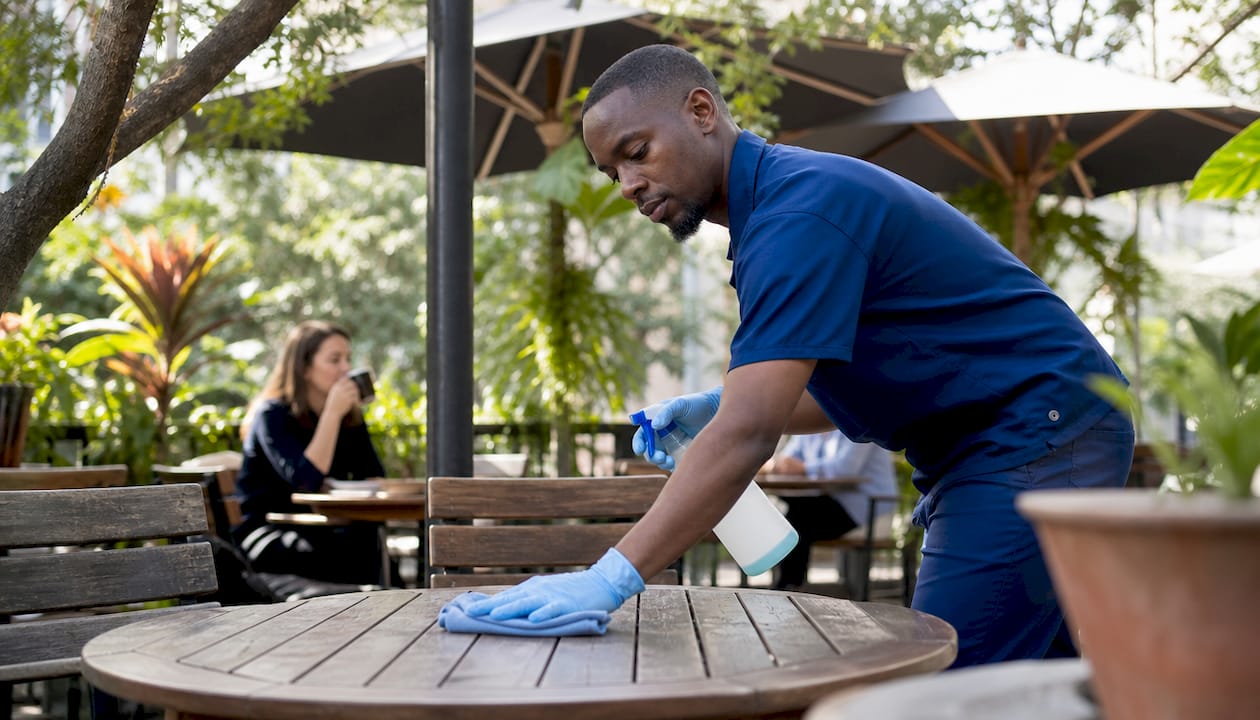
Professional infection control cleaning goes beyond routine janitorial work. It uses hospital-grade disinfectants with validated chemical dwell times, trained teams wearing appropriate PPE, and strict cross-contamination protocols between zones. High-touch surfaces such as door handles, lift buttons, shared equipment, and bathroom fixtures require the most frequent attention. Documented procedures are not optional. They are the evidence trail that protects your organisation during audits and regulatory inspections.
- Prioritise engineering controls (ventilation, barriers, filtration) as the first line of defence
- Apply standard precautions universally, not only when a risk is visible
- Schedule high-touch surface cleaning at defined intervals throughout the day
- Use hospital-grade disinfectants with correct contact times, not general-purpose cleaners
- Document every cleaning protocol and maintain records for compliance purposes
Pro Tip: Colour-coded cleaning cloths assigned to specific zones (bathrooms, kitchens, workstations) are one of the simplest and most effective cross-contamination controls available. They cost almost nothing and are immediately auditable.
How does infection control impact workforce health and business operations?
Effective infection prevention directly reduces illness-related absenteeism and the operational disruptions that follow. Infection prevention cleaning strengthens workforce stability and brand confidence, two outcomes that go well beyond regulatory compliance. When staff see that their employer takes hygiene seriously, trust in the workplace increases and retention improves.
The business case for infection control is straightforward. Fewer sick days mean fewer gaps in rosters, less reliance on casual labour, and more consistent service delivery. For schools and childcare centres, lower illness rates translate directly into better attendance and fewer parent complaints.
Infection prevention is a driver of workforce stability and a safeguard for brand reputation. Businesses that treat hygiene as a compliance checkbox rather than an operational priority are the ones most exposed when an outbreak occurs.
Reputational risk is real and often underestimated. A single publicised outbreak linked to poor hygiene practices can damage client relationships and trigger regulatory scrutiny simultaneously. Businesses with infection control gaps face increased absenteeism, regulatory inspections, and potential operational disruptions. The cost of prevention is consistently lower than the cost of response.
Audit readiness is another practical benefit. Facilities with documented infection control programmes move through regulatory inspections with confidence. Those without documentation face delays, corrective action notices, and in serious cases, enforcement action. Understanding your WHS hygiene responsibilities is the starting point for building that confidence.
What are the regulatory frameworks shaping infection control in Australia?
Safe Work Australia’s Model Code of Practice for Biological Hazards became effective in march 2026. It is Australia’s first national dedicated code for biological hazard management and it applies across all industries. Construction, mining, hospitality, retail, and education are all within scope. This is a significant shift from the previous assumption that infection control was primarily a healthcare concern.
The Australian Commission on Safety and Quality in Health Care sets infection prevention standards for clinical settings, but the Safe Work Australia Code now extends comparable duties to every workplace with biological hazard exposure. Duty holders must identify risks, implement controls using the Hierarchy of Controls, and review those controls regularly.
| Framework | Scope | Key requirement |
|---|---|---|
| Safe Work Australia Model Code (March 2026) | All industries | Identify and control biological hazards using hierarchy of controls |
| Australian Commission on Safety and Quality in Health Care | Healthcare settings | Infection prevention and control standards for clinical environments |
| State WHS regulators (e.g. WorkSafe Victoria, SafeWork NSW) | State-based enforcement | Compliance with national code and state WHS legislation |
| Standard precautions (Victorian Health) | All workplaces | Universal minimum infection control practices for all workers |
Non-healthcare workplaces such as construction, mining, and hospitality are now legally expected to manage biological hazards under this code. State regulators enforce compliance, and non-compliance carries real consequences including improvement notices, fines, and in serious cases, prosecution. The regulatory environment has moved decisively. Facilities that have not reviewed their biological hazard controls since before march 2026 are already behind.
How can educators and business owners implement effective infection control programmes?
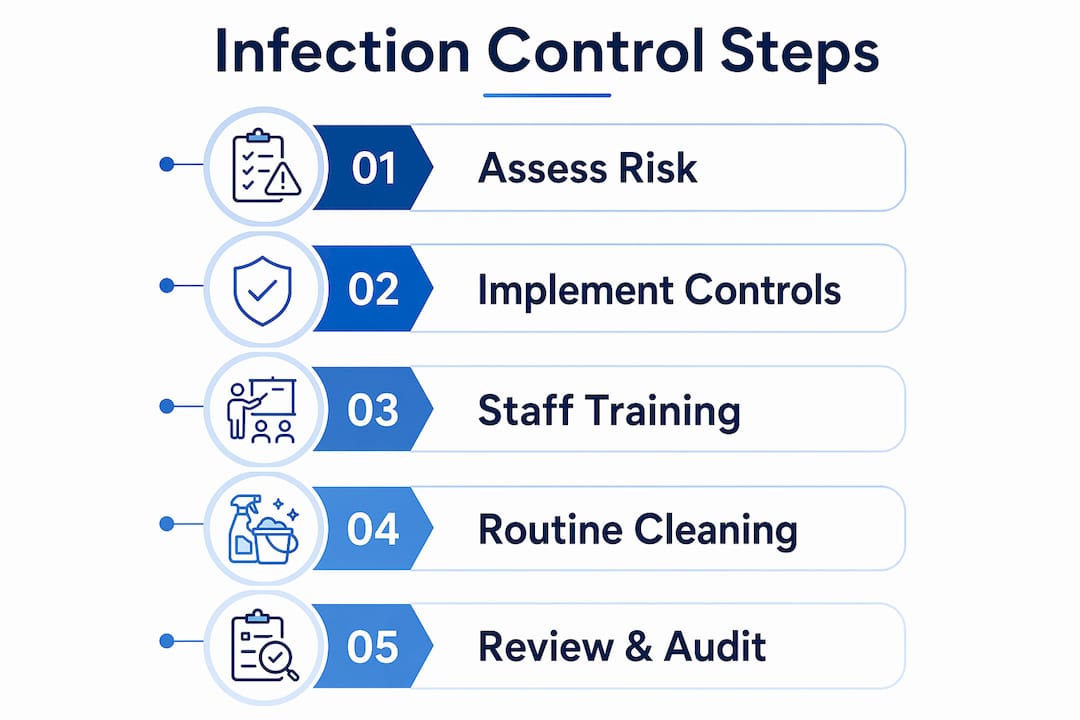
A structured infection control programme starts with a site-specific risk assessment. Generic checklists do not account for the unique layout, occupancy patterns, and activities of your facility. A school canteen has different risks to a corporate office bathroom, and your controls need to reflect that.
- Conduct a site-specific risk assessment. Identify all biological hazard exposure points in your facility, including shared surfaces, waste streams, and areas with high occupant turnover.
- Document your cleaning and hygiene protocols. Written procedures aligned with Safe Work Australia’s Model Code and standard precautions give staff clear guidance and give you an audit trail.
- Train and supervise all relevant staff. Cleaning and operational staff need practical training, not just a policy document. Competency checks and refresher sessions matter.
- Monitor and escalate during illness events. When illness rates rise or an outbreak is suspected, increase cleaning frequency, isolate affected areas, and notify relevant health authorities as required.
- Review your programme regularly. Risk assessments and protocols should be reviewed at least annually and after any significant incident or regulatory change.
For educators, infection control in schools involves additional considerations around student welfare, parental communication, and state education department guidelines. Schools that embed infection control into their daily operational routines, rather than treating it as an emergency response, consistently manage illness events with less disruption.
Professional hygiene services provide a practical solution for facilities that lack in-house expertise or capacity. Ozifresh, with over 40 years of experience across Brisbane, the Gold Coast, and Melbourne, delivers tailored hygiene programmes that align with current Australian standards. Engaging a professional provider also transfers a significant portion of the compliance burden, since documented service records from a qualified provider carry weight during regulatory inspections.
Pro Tip: Schedule a formal infection control review at the start of each school term or financial quarter. Tying reviews to existing business rhythms makes them far more likely to happen consistently.
Key takeaways
Effective infection control protects workforce health, supports regulatory compliance, and prevents the operational and reputational damage that follows an outbreak.
| Point | Details |
|---|---|
| Hierarchy of controls | Prioritise engineering and administrative controls over PPE for reliable, consistent protection. |
| Regulatory compliance | Safe Work Australia’s March 2026 Code applies to all industries, not just healthcare settings. |
| Documentation matters | Written protocols and service records are your primary defence during audits and inspections. |
| Business impact | Infection prevention reduces absenteeism, protects brand reputation, and supports operational continuity. |
| Professional support | Engaging qualified hygiene providers strengthens compliance and fills in-house capacity gaps. |
Why infection control thinking needs to change across industries
The most persistent problem I see is the assumption that infection control belongs to hospitals. Facility managers in retail, hospitality, and education consistently underestimate their biological hazard exposure until something goes wrong. By then, the cost is already significant.
The March 2026 Safe Work Australia Code is a genuine turning point. For the first time, a construction site foreman and a hospital infection control nurse operate under the same national framework. That is not a bureaucratic detail. It reflects a long-overdue recognition that pathogens do not respect industry categories.
What I have found actually works is embedding infection control into the daily operational culture of a facility, not treating it as a separate compliance programme. When cleaning staff understand why they use specific disinfectants at specific contact times, they apply the protocols correctly. When managers treat hygiene documentation as a normal part of operations rather than a burden, audit readiness becomes the default state.
The role of cleaning in disease prevention is more significant than most business owners realise. Routine cleaning removes organic matter that would otherwise harbour pathogens. Infection control cleaning then eliminates the pathogens themselves. Conflating the two is one of the most common and costly mistakes in facility management.
Overreliance on PPE without addressing engineering and administrative controls is the other major gap. PPE fails when it is worn incorrectly, removed carelessly, or simply not available. Engineering controls keep working through every shift. Build your programme from the environment inward, not from the PPE outward.
— Ozifresh
Ozifresh hygiene services for compliant, healthy facilities
Ozifresh provides professional hygiene and sanitary services to workplaces, schools, and commercial facilities across Brisbane, the Gold Coast, and Melbourne. With over 40 years of experience, the team delivers tailored programmes that align with Safe Work Australia’s Model Code of Practice and current infection prevention standards. Services include hand hygiene solutions, sanitary disposal, sharps management, and hygiene consumables, all supported by documented service records that hold up under regulatory scrutiny. Facilities in Brisbane can access local hygiene services designed specifically for their compliance needs. Contact Ozifresh to discuss a hygiene programme built around your facility’s specific risks and operational requirements.
FAQ
What is infection control and why does it matter for workplaces?
Infection control is the set of practices used to prevent the spread of infectious agents in shared environments. Safe Work Australia’s 2026 Model Code of Practice makes it a legal duty for all industries, not just healthcare.
What are the most effective infection control measures for facilities?
Engineering controls such as ventilation and physical barriers are the most reliable, followed by administrative controls like cleaning schedules and staff training. PPE is the least effective layer on its own and should supplement, not replace, other controls.
How does infection control cleaning differ from regular cleaning?
Infection control cleaning uses hospital-grade disinfectants with validated contact times, trained personnel, and documented cross-contamination protocols. Regular janitorial cleaning removes visible dirt but does not reliably eliminate pathogens.
Which Australian regulations apply to infection control in non-healthcare settings?
Safe Work Australia’s Model Code of Practice for Biological Hazards, effective march 2026, applies to all industries including construction, hospitality, retail, and education. State WHS regulators such as WorkSafe Victoria and SafeWork NSW enforce compliance.
How often should infection control programmes be reviewed?
Infection control programmes should be reviewed at least annually and after any significant illness event, regulatory change, or facility modification. Regular reviews keep controls current and documentation audit-ready.
Recommended
Ready for a cleaner, safer workplace?
Contact our team today to discuss hygiene services for your business in Brisbane, Melbourne or the Gold Coast.