Hygiene compliance guide 2026: meet every standard

TL;DR:
- Hygiene compliance in 2026 requires industry-specific standards, accountability, and validated measurement tools to prevent infection and contamination. Effective programmes depend on designated leaders, ongoing training, digital monitoring, and regular reviews to adapt to evolving regulations and challenges. Building a strong hygiene culture enhances safety, reduces liability, and supports business resilience beyond mere regulatory adherence.
Hygiene compliance is defined as the systematic practice of meeting all regulatory, industry, and best-practice standards to prevent infection, contamination, and harm in your business environment. For Australian business owners and compliance officers, 2026 brings updated benchmarks across healthcare, foodservice, and commercial settings that carry real penalties for non-compliance. Hand hygiene alone remains the single most effective measure to prevent healthcare-associated infections, according to NSW Clinical Excellence Commission guidance. This hygiene compliance guide 2026 covers the standards you must meet, how to build a programme that sticks, the tools that make audits reliable, and the common mistakes that cause compliance to drift.
What hygiene standards must your business meet in 2026?
Hygiene compliance standards in 2026 are industry-specific, but they share a common framework built around facilities, handwashing, surface management, personal protective equipment, and documented accountability. Understanding which regulations apply to your operation is the first step toward meeting them.
In Australian healthcare, SA Health benchmarks compliance across states and the Commonwealth, with hand hygiene positioned as the primary infection control measure. The Hand Hygiene Australia programme sets the national standard, and facilities are expected to demonstrate measurable, auditable performance against it. For healthcare compliance officers, this means your programme must go beyond policy documents and produce verifiable data.
In foodservice, the regulatory picture is equally detailed. The FSSAI Schedule 4 requirements specify washable surfaces, separation of raw and cooked food areas, colour-coded chopping boards, temperature controls, and annual medical fitness certificates for food handlers. While these originate in Indian food regulation, they reflect the same principles embedded in Australian Food Standards Code requirements and are a useful benchmark for any food business conducting a gap analysis.
For commercial workplaces, the 2026 hygiene guidelines draw from Safe Work Australia frameworks covering sanitation facilities, waste disposal, and personal hygiene provisions. Retail, hospitality, and education sectors each carry additional obligations under state-based public health legislation.
Key regulatory elements that apply across most industries include:
- Handwashing facilities with soap, running water, and drying provisions at required locations
- Surface cleaning and disinfection schedules documented and signed off by responsible staff
- PPE availability appropriate to the risk level of the work environment
- Temperature controls for food storage and preparation areas
- Waste disposal systems including sanitary, sharps, and nappy disposal where applicable
- Staff health declarations and fitness-to-work protocols
Pro Tip: Map every standard to your specific industry and premises type before building your compliance checklist. A commercial kitchen faces different obligations than a medical clinic or a retail floor. Mixing up requirements wastes time and creates gaps.
How to design and implement a hygiene compliance programme
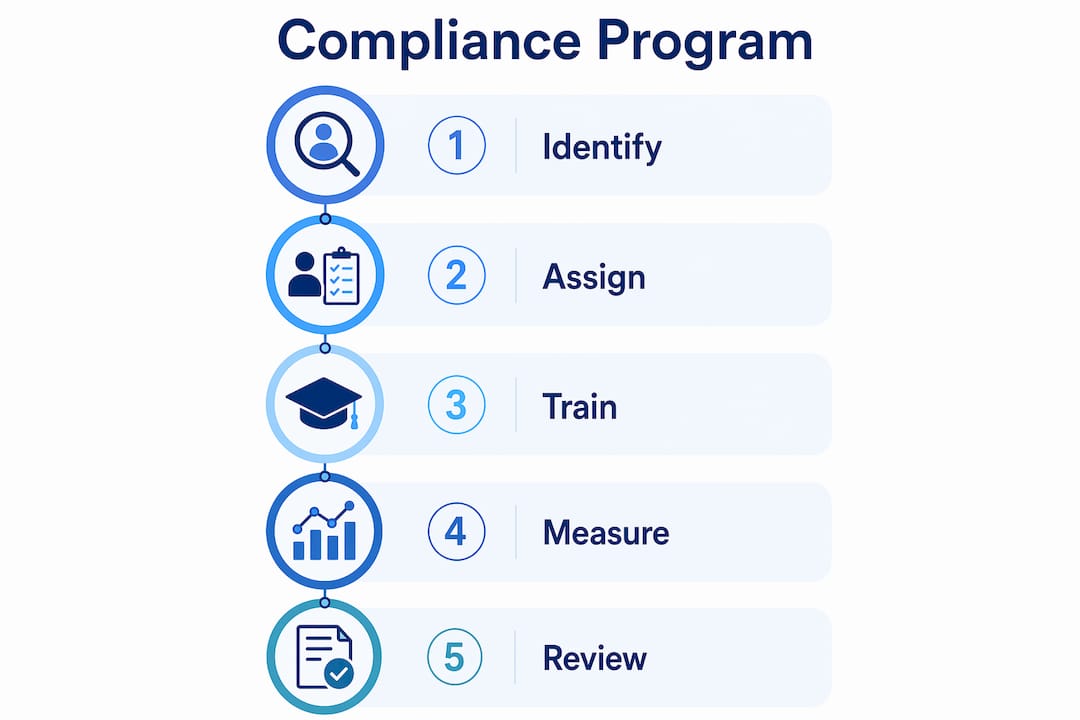
A hygiene compliance programme that actually works in 2026 is built on accountability, documented procedures, and behaviour change. Knowing the rules is not enough. You need a system that converts policy into daily practice.
Follow these steps to build a programme that meets current requirements:
-
Appoint a Person in Charge. Every food operation requires a designated Person in Charge responsible for foodborne disease prevention, HACCP adherence, staff training, and corrective actions. Without this role clearly assigned, hygiene responsibility diffuses across the team and produces a checklist mentality rather than a managed culture. The same principle applies in healthcare and commercial settings.
-
Develop written hygiene policies based on HACCP principles. Hazard Analysis and Critical Control Points methodology gives your policies a logical structure: identify hazards, set control measures, monitor them, and document corrective actions. Policies should be specific to your premises, not copied from generic templates.
-
Train staff with comprehension gaps in mind. Research shows that improved hygiene knowledge does not guarantee behaviour change. Training must go beyond posters and induction videos. Scenario-based drills, immediate feedback, and regular retraining are what convert understanding into consistent practice.
-
Implement standardised checklists and digital monitoring tools. Digital checklists and wireless temperature sensors improve recordkeeping accuracy and provide continuous monitoring with immediate alerts. Cloud-based storage makes audit preparation significantly faster and reduces the risk of lost paper records.
-
Schedule regular internal audits. Audits should not be annual events. Monthly or quarterly internal reviews catch compliance drift before it becomes a regulatory problem. Assign audit responsibility to someone other than the Person in Charge to maintain objectivity.
-
Review and update your programme when standards change. Regulatory updates in 2026 require compliance officers to monitor SA Health, Food Standards Australia New Zealand, and Safe Work Australia for amendments.
Pro Tip: Run scenario-anchored drills where staff practise the exact steps required in a contamination event or audit scenario. Immediate, specific feedback during these drills produces faster and more durable behaviour change than any written policy alone.
What tools and measurements help ensure hygiene compliance?
Reliable measurement separates genuine compliance from the appearance of compliance. The right tools give you data you can act on, not just records that satisfy an auditor.
The Hand Hygiene Compliance and Proficiency Scale is a validated assessment instrument developed for healthcare settings that measures compliance and identifies specific improvement areas with high internal consistency. Critically, it separates institutional factors, antiseptic use, and individual behaviour into distinct components. This matters because targeting interventions at root causes produces better outcomes than treating compliance as a single undifferentiated problem. A facility with strong antiseptic availability but poor hand hygiene technique needs a different response than one with the reverse profile.
For food and commercial businesses, the equivalent measurement approach involves structured audit templates covering handwashing stations, surface cleaning logs, temperature records, and staff health documentation. Benchmarking against national standards shifts the focus from informal training to measurable, auditable hygiene KPIs.
| Tool | Features | Best suited for |
|---|---|---|
| Hand Hygiene Compliance and Proficiency Scale | Validated, multi-component, separates behaviour from structure | Healthcare facilities |
| Digital temperature sensors | Wireless, continuous monitoring, automated alerts | Food businesses, cold chain |
| Digital compliance checklists | Cloud storage, timestamped, audit-ready | All industries |
| Structured audit templates | Standardised scoring, gap identification | Commercial and hospitality |
| SA Health benchmarking data | State and Commonwealth comparisons | Healthcare and aged care |
Key features to look for in any compliance measurement tool:
- Separation of compliance components (education, antiseptic use, practice behaviour) for targeted improvement
- Automated recordkeeping that reduces manual data entry errors
- Audit-ready output that can be produced quickly during inspections
- Alerts for non-compliance events rather than retrospective reporting only
How to overcome common hygiene compliance challenges
The most common reason hygiene compliance fails is not ignorance of the rules. It is the gap between knowing what to do and consistently doing it under operational pressure.
Delegating hygiene without accountability is the first major pitfall. When no single person owns the outcome, tasks get skipped during busy periods and nobody notices until an audit or an incident. Assigning a Person in Charge with documented authority and regular reporting obligations closes this gap.
Assuming training equals behaviour change is the second. Psychosocial factors like depression measurably attenuate the protective effect of hygiene practices, which means staff under sustained stress or poor mental health may not maintain compliance even when they know the correct procedures. Compliance programmes that ignore staff wellbeing produce inconsistent results.
Inconsistent documentation is the third. Paper-based records get lost, altered, or simply not completed. Switching to digital checklists with timestamped entries removes this vulnerability and makes your records defensible during audits.
Pro Tip: Measure outcomes, not just process adherence. Tracking infection rates, near-miss incidents, and audit scores alongside checklist completion gives you a real picture of whether your programme is working. A 100% checklist completion rate alongside rising incident reports is a warning sign, not a success.
Additional strategies that prevent compliance drift include:
- Monthly team briefings that address specific compliance gaps identified in recent audits
- Recognition systems that acknowledge consistent compliance performance
- Clear escalation pathways when staff identify hygiene risks they cannot resolve themselves
- Regular review of commercial hygiene best practices to incorporate updated methods
How to keep your compliance programme current
Hygiene regulations do not stay static. Standards are updated, new pathogens emerge, and technology changes what is possible in monitoring and documentation. A compliance programme built in 2024 and left unchanged will have gaps by 2026.
Regular policy reviews are non-negotiable. Schedule a formal review at least annually, and trigger an unscheduled review whenever a relevant standard is amended. Assign someone to monitor updates from Safe Work Australia, Food Standards Australia New Zealand, and state health departments as a standing responsibility.
Building hygiene resilience for epidemic and pandemic scenarios is now a baseline expectation, not an advanced consideration. Antimicrobial resistance is an escalating public health concern, and businesses that rely on a single disinfectant product without a rotation strategy face increasing risk. Your programme should specify product types, concentrations, and rotation schedules.
Leadership and culture determine whether compliance survives operational pressure. Compliance officers who have executive support can enforce standards consistently. Those operating without it find that hygiene requirements are the first thing cut when the business is under pressure. Making the business case for hygiene compliance in financial terms, reduced liability, lower absenteeism, and protected reputation, secures that support.
Useful practices for maintaining current compliance include:
- Subscribing to regulatory update notifications from relevant Australian authorities
- Using cloud-based compliance software that allows policy documents to be updated and redistributed instantly
- Conducting annual third-party audits to identify blind spots internal teams miss
- Reviewing healthcare sanitisation steps and equivalent industry guides annually for benchmark updates
Key takeaways
Hygiene compliance in 2026 requires a structured programme with designated accountability, validated measurement tools, and behaviour-focused training to meet Australian regulatory standards across all industries.
| Point | Details |
|---|---|
| Appoint a Person in Charge | Assign clear ownership of hygiene outcomes to prevent diffused responsibility and checklist-only culture. |
| Use validated measurement tools | The Hand Hygiene Compliance and Proficiency Scale and digital checklists produce auditable, actionable data. |
| Training must drive behaviour, not just knowledge | Scenario-based drills and feedback loops convert understanding into consistent daily practice. |
| Address psychosocial factors | Staff wellbeing directly affects compliance performance; programmes must account for this. |
| Keep your programme current | Annual reviews, regulatory monitoring, and cloud documentation maintain audit readiness as standards evolve. |
What 40 years of hygiene work has taught me about compliance
The businesses that struggle most with hygiene compliance are rarely the ones that ignore the rules. They are the ones that treat compliance as a documentation exercise rather than a cultural one. I have seen well-resourced organisations with immaculate checklists and persistent infection problems, and smaller operations with modest budgets and near-perfect outcomes. The difference is almost always accountability and behaviour, not paperwork.
The insight that knowledge alone does not change behaviour is one that many compliance officers intellectually accept but operationally ignore. They run an induction, tick the training box, and move on. The organisations that sustain compliance run drills, give specific feedback, and treat hygiene as a skill to be practised, not a policy to be read.
The other thing I would push back on is the idea that compliance is primarily a regulatory burden. When you build a programme that genuinely works, you reduce absenteeism, protect your reputation, and create a workplace people feel safe in. That is worth more than avoiding a fine. The hygiene compliance strategies that last are the ones embedded in how the business operates every day, not bolted on at audit time.
— Ozifresh
How Ozifresh supports your 2026 compliance needs
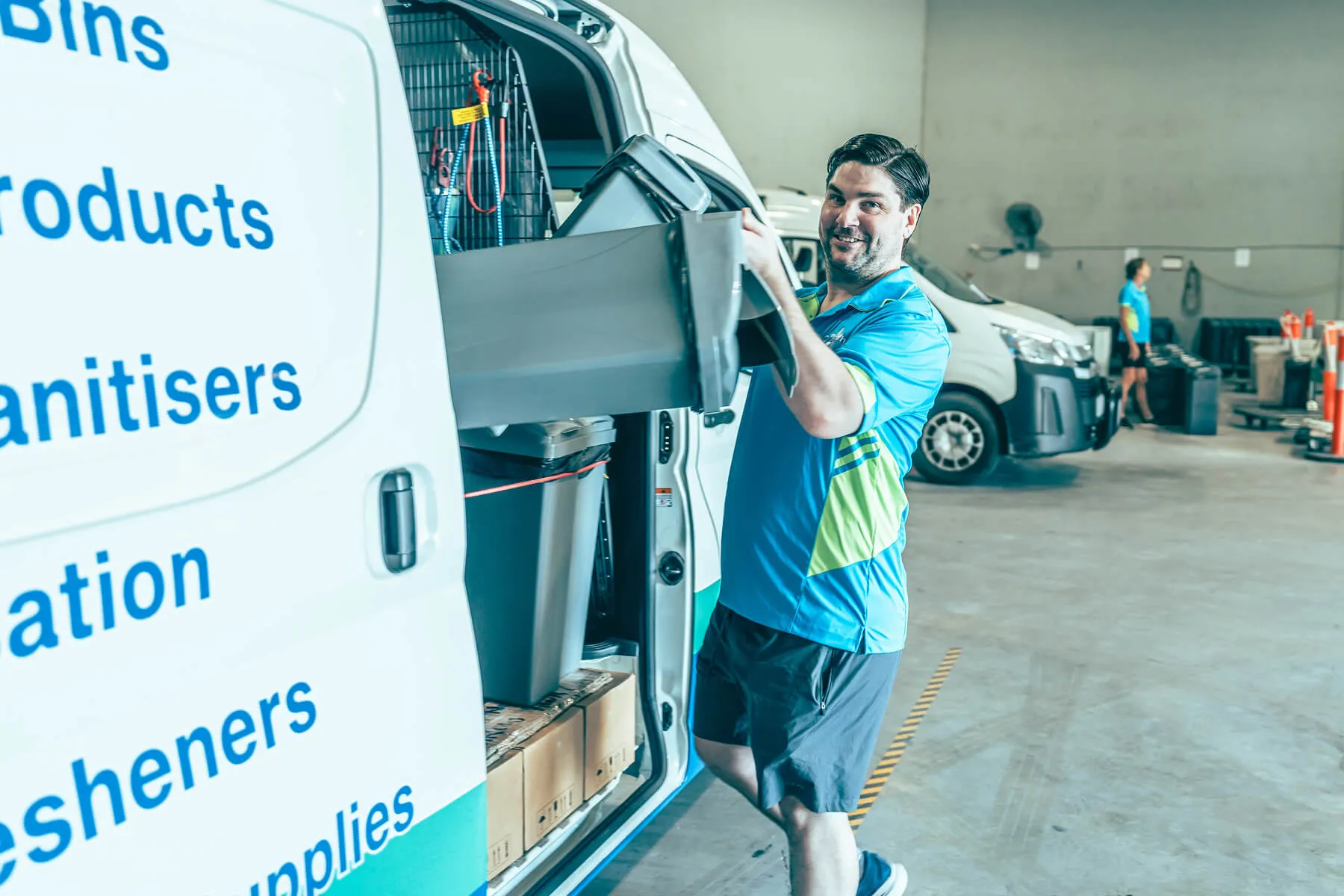
Ozifresh has delivered professional hygiene solutions to Australian businesses across Brisbane, the Gold Coast, and Melbourne for over 40 years. Whether you operate a healthcare facility, a commercial kitchen, an office, or a retail space, the right physical hygiene infrastructure is the foundation of any compliance programme. Ozifresh supplies sanitary products and hygiene services including hand sanitiser dispensers, soap dispensers, sanitary disposal units, sharps containers, and nappy disposal systems, all maintained on a reliable service schedule. For businesses that need solutions tailored to their industry, Ozifresh’s industry hygiene solutions cover the specific requirements of healthcare, hospitality, education, and commercial environments. Contact Ozifresh to discuss a hygiene package built around your compliance obligations.
FAQ
What is hygiene compliance?
Hygiene compliance is the practice of meeting all regulatory and best-practice standards to prevent infection, contamination, and harm in a business environment. It covers handwashing, surface cleaning, waste disposal, staff health, and documentation requirements specific to your industry.
Why does hygiene compliance matter in 2026?
Hand hygiene is the single most effective measure to prevent healthcare-associated infections, and updated 2026 standards across healthcare, foodservice, and commercial sectors carry real penalties for non-compliance. Businesses that maintain auditable compliance records also reduce liability and protect their reputation.
What is a Person in Charge in a hygiene programme?
A Person in Charge is a designated staff member responsible for foodborne disease prevention, HACCP adherence, staff training, and corrective actions. Without this role clearly assigned, hygiene responsibility diffuses and compliance becomes inconsistent.
How do I measure hygiene compliance reliably?
The Hand Hygiene Compliance and Proficiency Scale is a validated tool for healthcare settings that separates compliance into components including education, antiseptic use, and practice behaviour. Digital checklists and wireless temperature sensors provide equivalent measurement capability for food and commercial businesses.
How often should a hygiene compliance programme be reviewed?
A formal review should occur at least annually, with unscheduled reviews triggered by any amendment to relevant Australian standards from Safe Work Australia, Food Standards Australia New Zealand, or state health departments.
Recommended
Ready for a cleaner, safer workplace?
Contact our team today to discuss hygiene services for your business in Brisbane, Melbourne or the Gold Coast.